


You’ve been watching Nifty all day. Up 200 points by 10 AM. A sharp sell-off after lunch. A clean recovery by 2 PM.
And somewhere between those moves, the thought hits: people are making money right now. Real money. Off exactly what I’m watching.
So why aren’t you?
Most beginners ask, “Can I trade Nifty intraday?” and get a half-answer, yes, but through futures. Yes, but through options. Yes, but you need a margin.
None of it lands because nobody starts from zero. This does.
What Is the Nifty 50 Index?
Before you can figure out how to trade Nifty intraday, you need to understand what Nifty actually is, because most beginners assume it works like a regular stock. It doesn’t.
The Nifty 50 is an index. It’s a number published by the National Stock Exchange (NSE) of India that measures the combined performance of 50 of the country’s largest and most liquid companies.
When news channels say “Nifty closed at 24,500 today,” they mean: when you take the weighted performance of those 50 companies together, the result is 24,500.
The index itself has no shares. There’s nothing to own directly. It’s purely a measuring tool, like a thermometer reading the temperature of the overall market.
Think of it this way: The Nifty 50 is like a class average. It tells you how the top 50 students are doing overall, but you can’t sit next to “the average” and interact with it directly.
This one idea changes how you approach the whole topic. Keep it in mind as we go further.
How to Trade Nifty 50 Intraday?
Here’s where the confusion usually starts.
If you open your trading account right now and search “Nifty 50” expecting to place a buy order, you won’t find it listed the way Reliance or Infosys is. That’s because the index itself is not a tradable asset.
You cannot own a piece of the Nifty 50 directly.
But, and this is the part most beginners miss, you absolutely can profit from its intraday movement.
There are financial instruments built specifically to let traders participate wherever Nifty moves during the trading session.
These are called derivatives, and they are how every active Nifty intraday trader operates, whether they’re a retail trader at home or an institution managing crores.
So the honest answer is: You can’t buy Nifty 50 directly in intraday trading, but you can do intraday trading in Nifty through instruments like Nifty Futures & Nifty Options.
That distinction is everything.
Let’s look at exactly what those instruments are and how each one works.
How to Buy Nifty 50 in Intraday for Beginners?
Once you know you can’t buy the index directly, the natural next question is: what do I actually trade?
There are two main options. Each works differently, suits a different type of trader, and carries its own risk profile.
- Nifty Options
The most widely used instrument for Nifty intraday trading. You buy a Call option when you expect Nifty to rise, or a Put option when you expect it to fall.
The biggest advantage for beginners, your maximum loss is capped at the premium you pay. You know your risk before you even enter the trade.
- Nifty Futures
A contract that tracks Nifty’s price in real time. It requires a larger capital commitment (margin) and, unlike options, your losses are not capped.
Futures are better suited for traders who already have a solid grip on risk management and want direct, unfiltered exposure to Nifty’s movement.
Here’s how a Nifty intraday trade unfolds from the moment you open your screen to the moment you exit.
Below are the steps you must follow to do Nifty Intraday with technical analysis.
Step 1: Check Market Direction Before Placing Any Nifty Trade
Spend the first 15 to 20 minutes just observing. How did global markets close overnight? Where is GIFT Nifty (a pre-market futures indicator) trading?
Are there any major events today, RBI decisions, company results, or US Fed announcements?
Nifty doesn’t move in isolation. Understanding the context behind today’s movement gives you a serious edge before you place a single rupee.
Step 2: Identify If Nifty Is Trending or Range-Bound
A trending market moves in a clear direction, higher highs or lower lows. A range-bound market bounces between two levels without picking a side.
This matters because the strategy you use should match the environment. A breakout strategy works beautifully in a trending market and gets chopped apart in a range.
Step 3: Choose the Right Nifty Instrument and Contract
Decide between options or futures. If you’re trading Nifty 50 options, choose the expiry date (weekly or monthly) and the strike price that fits your trade idea.
Weekly contracts move faster but decay quicker, monthly contracts are steadier and more forgiving while you’re still learning.
Step 4: Enter the Trade With a Stop Loss in Place
This is where patience separates good traders from impulsive ones. Don’t enter just because Nifty is moving. Enter because your strategy has given you a specific, objective trigger.
Your stop loss level must be decided before you click buy. Not after. Not “let me see how it goes first.” Right now, before you enter.
Step 5: Monitor Your Nifty Position Without Emotional Interference
Once you’re in, your plan does the work. Nifty will zig and zag, that’s normal. A small move against you doesn’t mean the trade is wrong.
Widening your stop loss because the trade feels uncomfortable is how small losses become large ones.
Trust your setup. If the stop loss gets hit, that’s the system working exactly as it should.
Step 6: Square Off Your Nifty Intraday Position Before Market Close
Intraday means the position closes the same day. Square off everything before 3:15 PM. Holding overnight turns your trade into something else entirely, with risks you didn’t plan for when you entered.
Roles of Expiry in Nifty Intraday Trading
If you’re buying Nifty intraday through options, which most beginners do, there’s one concept that can cost you money even when you’re right about the direction.
It’s called time decay, and it’s directly tied to something called the expiry date.
Every Nifty weekly options contract expires on every Thursday. As that date approaches, the option loses value independently of whether Nifty moves.
This erosion is called Theta decay, and ignoring it is one of the most common reasons beginners lose money on trades that are “technically correct.”
Nifty Intraday Option Buying Strategy
Knowing you can buy Nifty intraday through options or futures is step one. Step two is knowing when actually to pull the trigger, and that’s where strategy comes in.
There’s no single formula that works every day. But these three approaches consistently come up among experienced Nifty intraday traders because they’re built on how the market actually moves, not on guesswork.
1. Momentum Breakout Strategy
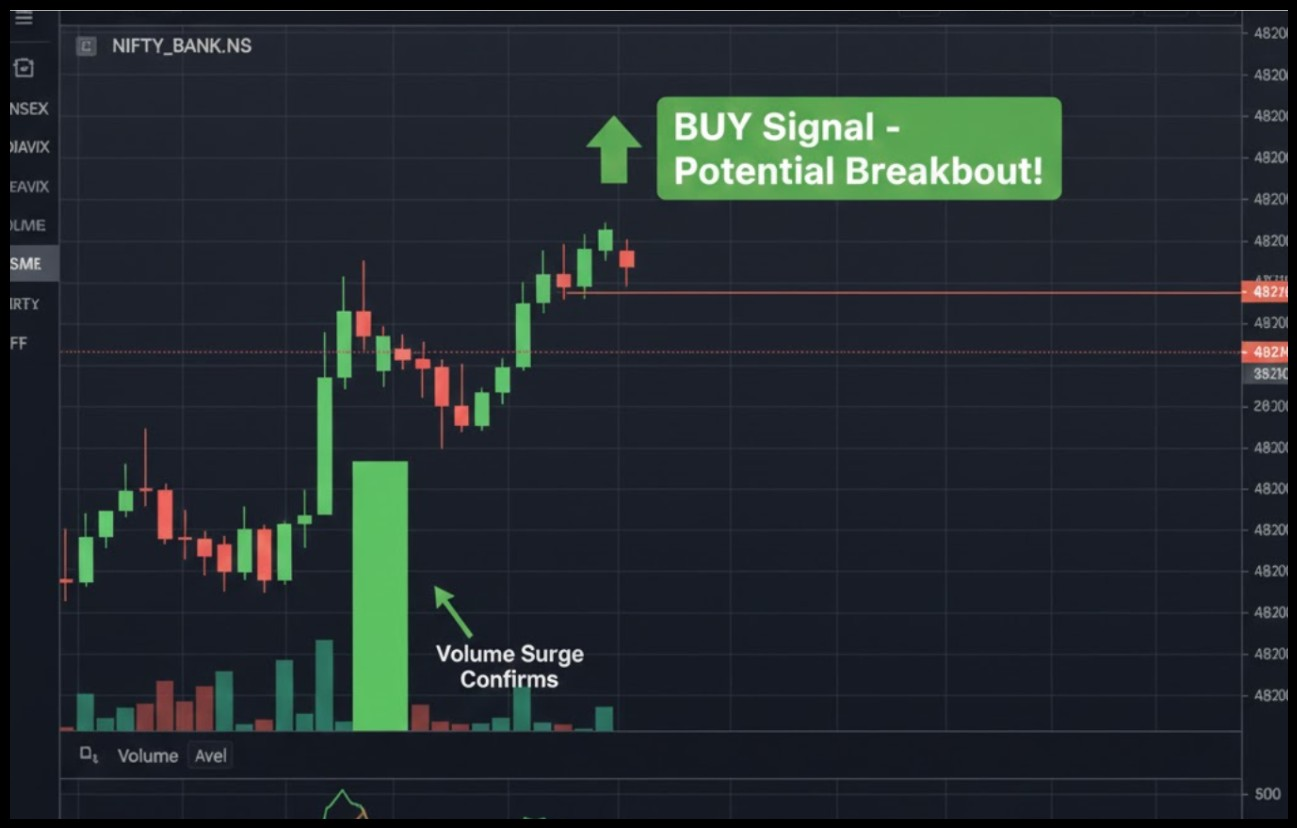
If you want to trade without an indicator, then this is the one Nifty intraday strategy without indicator that gives good results.
Markets often stay compressed in a tight range before making a sharp directional move. The breakout strategy waits patiently for that move and enters once it begins with conviction.
When Nifty punches above a key resistance level with speed and volume behind it, traders buy call options. When it breaks below a support with the same force, put options come into play.
The important word here is momentum. A slow, hesitant break tends to reverse quickly. A fast break with volume behind it tends to follow through, and that’s where the opportunity lies.
2. VWAP Strategy
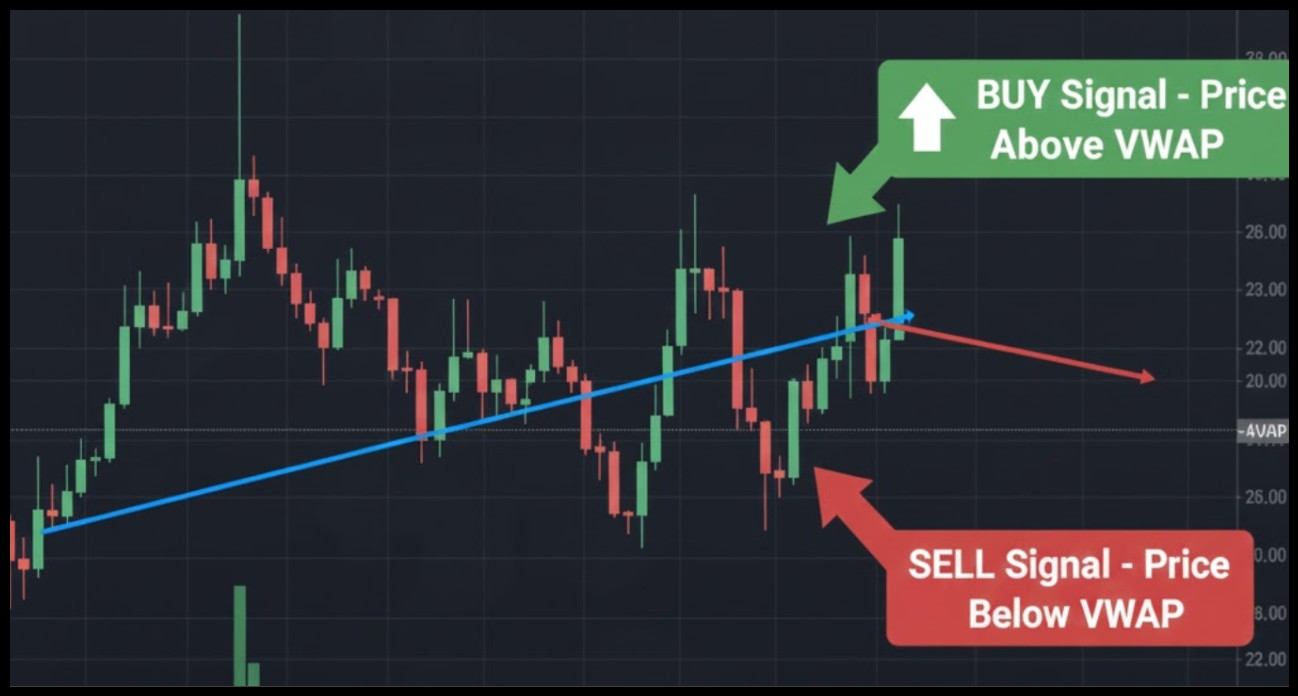
VWAP, Volume Weighted Average Price, tells you the average price at which Nifty has traded throughout the day, weighted by how much volume happened at each price level.
In plain terms, it shows you where most of the day’s real trading activity has occurred.
When Nifty is consistently trading above its VWAP, buyers are in control. When it’s below, sellers dominate. Traders use this to decide which direction to favour for the session, not to time exact entries, but as a powerful directional filter when combined with price action signals.
Price above VWAP – Lean bullish
Price below VWAP – Lean bearish
3. Open Range Breakout (ORB) Trading Strategy
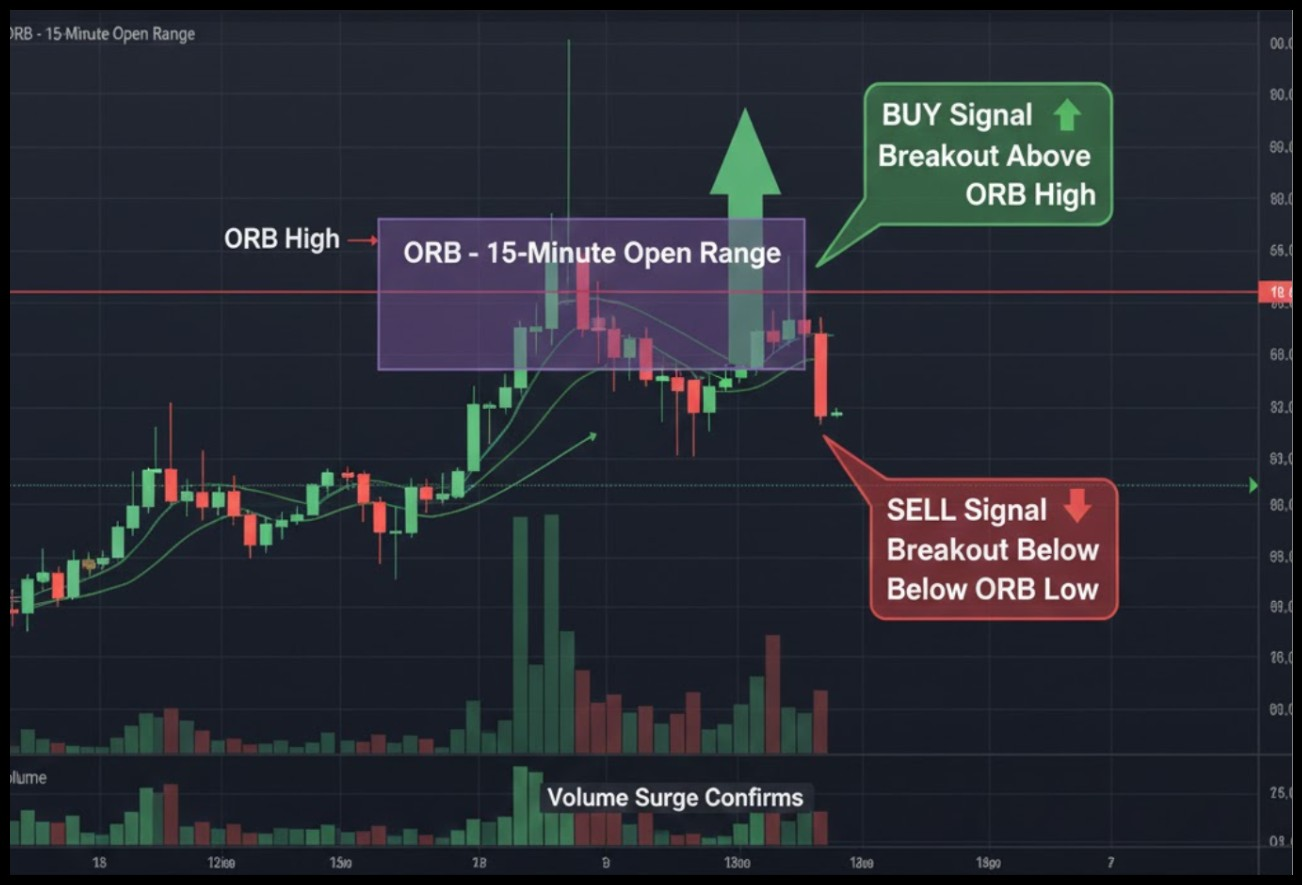
The first 15 to 30 minutes after the market opens are often the most informative of the entire session. This window reflects how participants are digesting overnight events, global cues, and early sentiment all at once.
The ORB strategy marks the high and low of this opening range. When Nifty clearly breaks above or below that range, with conviction, traders enter in the direction of the breakout.
It’s objective, visual, and beginner-friendly. You’re not guessing or interpreting, you’re waiting for a clear, visible event before committing to a trade. That’s exactly the kind of discipline that makes a difference over time.
Break above ORB High – Long trade
Break below ORB Low – Short trade
Conclusion
Now you have the full picture. You can’t buy the Nifty 50 index directly, but through futures, options, and ETFs, you absolutely can do intraday trading in Nifty and participate in its movement every session.
More importantly, you now understand how it actually works, the instruments, the process, the costs, the expiry mechanics, and the strategies that give your trades a logical foundation.
The market rewards preparation. Start with understanding, build your strategy, and let discipline carry you forward.
But knowing and doing are two very different things. The next step isn’t to find a better article; it’s to open a chart, pick one strategy, and start watching how Nifty actually behaves during a live session.
Theory makes sense in hindsight. Screen time is what builds real conviction.
Start small. Stay consistent. And treat every trade, win or loss, as information, not just an outcome.
Frequently Asked Questions
Q1: Can I buy the Nifty 50 directly in intraday trading?
Ans: No, you cannot buy the Nifty 50 index directly. It is not a tradable asset but a measure of the combined performance of 50 large-cap companies.
However, you can participate in its movement through instruments like Nifty Futures, Nifty Options, and Nifty ETFs.
Q2: How to Trade in Nifty Intraday for Beginners?
Ans: Beginner intraday traders typically observe the market for a while until they can accurately identify support and resistance levels and then learn how derivative instruments, such as futures and options, respond to price movements.
Q3: What are the strategies to trade in Nifty Intraday?
Ans: To trade in Nifty intraday, traders mostly use the VWAP strategy. VWAP is one of the most widely used intraday filters among experienced traders.
No universally verified success rate exists; results depend entirely on the trader’s discipline, risk management, and market conditions
Before investing capital, invest your time in learning Stock Market.
Fill in the basic details below and a callback will be arranged for more information: