


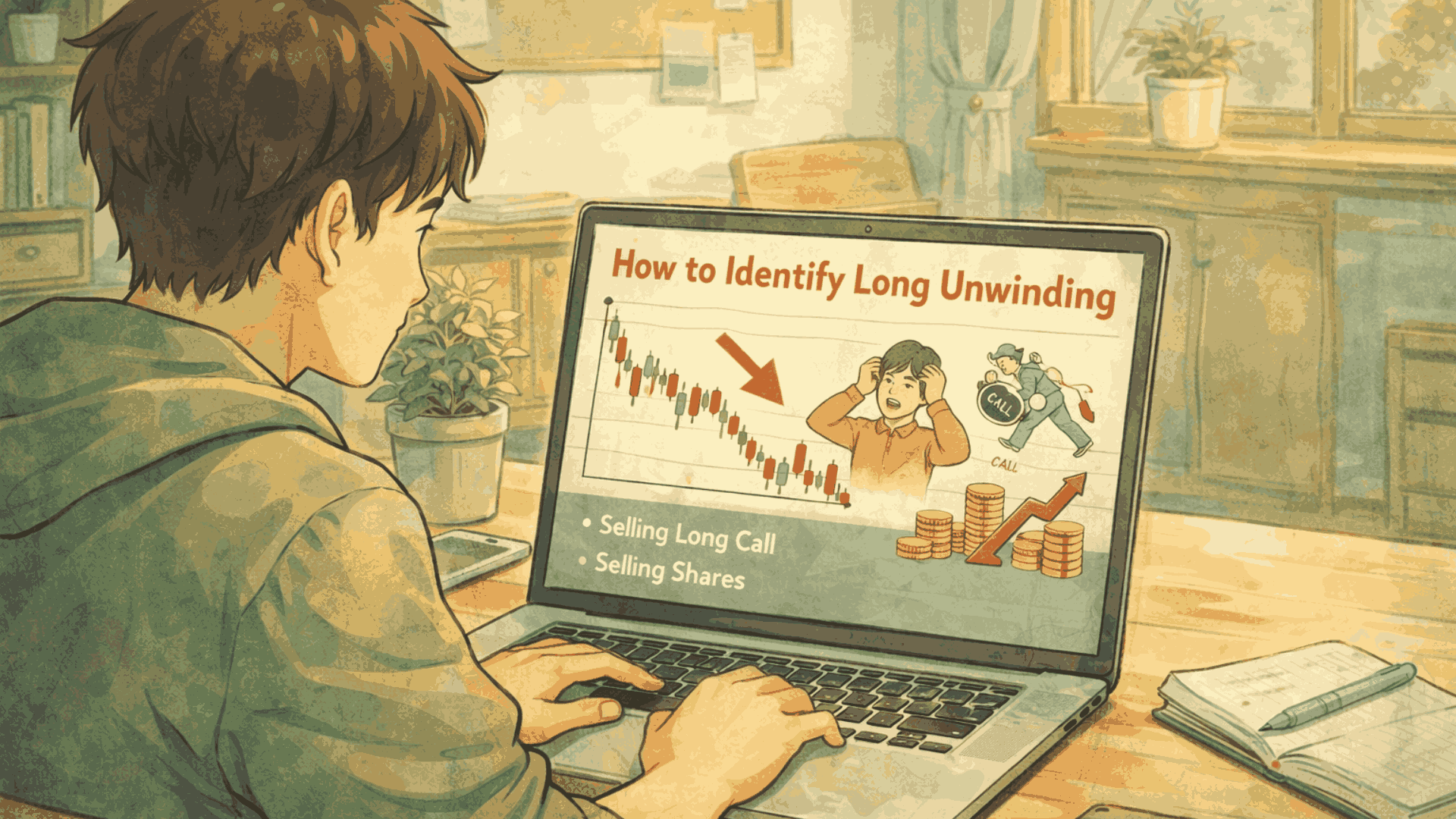
Most traders see a falling price and immediately think it is time to buy the dip. But what if the dip is not a buying opportunity at all?
Sometimes the market falls not because bears are attacking but because bulls are quietly leaving. This silent exit of existing buyers is what the market calls long unwinding.
Knowing how to identify long unwinding can save you from entering a trade at the wrong moment. It separates traders who blindly react to price from traders who actually read the data.
In this blog, you will learn every signal and clue you need to spot it in real time.
Long Unwinding Meaning in Stock Market
Long unwinding in the stock market happens when traders who previously created long (buy) positions start closing them to book profits. This leads to a fall in both price and Open Interest (OI).
It does not indicate aggressive bearishness. Instead, it reflects a lack of confidence in further upside. The existing buyers are exiting, but new sellers are not strongly entering yet.
In simple terms:
- Bulls are not getting stronger
- They are quietly exiting the market
This usually indicates the following points:
- Weakening bullish momentum
- Profit booking after a rally
- Temporary correction, not a crash
How to Find Long Unwinding?
To identify long unwinding, keep an eye on these eight technical signals:
- Falling Stock Price: The first sign is the most obvious one: the price starts to drop. You will see red candles on your chart, indicating that the upward momentum has paused.
- Decrease in Open Interest (OI): This is the “smoking gun.” In long unwinding, the Open Interest must fall along with the price. It proves that traders are closing old contracts rather than opening new sell positions.
- Negative Change in OI Column: When you look at the option chain or future data, look at the “Change in OI” column. If the numbers are negative (minus sign), it confirms that positions are being “unwound” or settled.
- Recent Peak or All-Time High: Long unwinding usually happens after a significant rally. If a stock has just hit a 52-week high or a major peak, traders naturally want to take their money off the table.
- Rejection at Resistance Levels: Watch for the stock hitting a “ceiling.” If the price touches a major resistance level and starts falling while OI drops, it is a clear sign that the bulls don’t have the strength to break through.
- Expiry Day Activity: On expiry days (like Thursday for Nifty), traders must close their positions. If the market isn’t moving up, long unwinding in call option contracts will happen as buyers exit to save their remaining premium, leading to a sharp drop in OI.
- Moderate Trading Volumes: Unlike a market crash, long unwinding often happens with moderate volume. It’s a steady exit of traders booking profits rather than a panicked rush to the door.
- Falling Call Premiums in the Option Chain: If you see call option prices falling and the Open Interest at those strikes also decreasing, the “bulls” are officially heading for the exit.
Long Unwinding Example
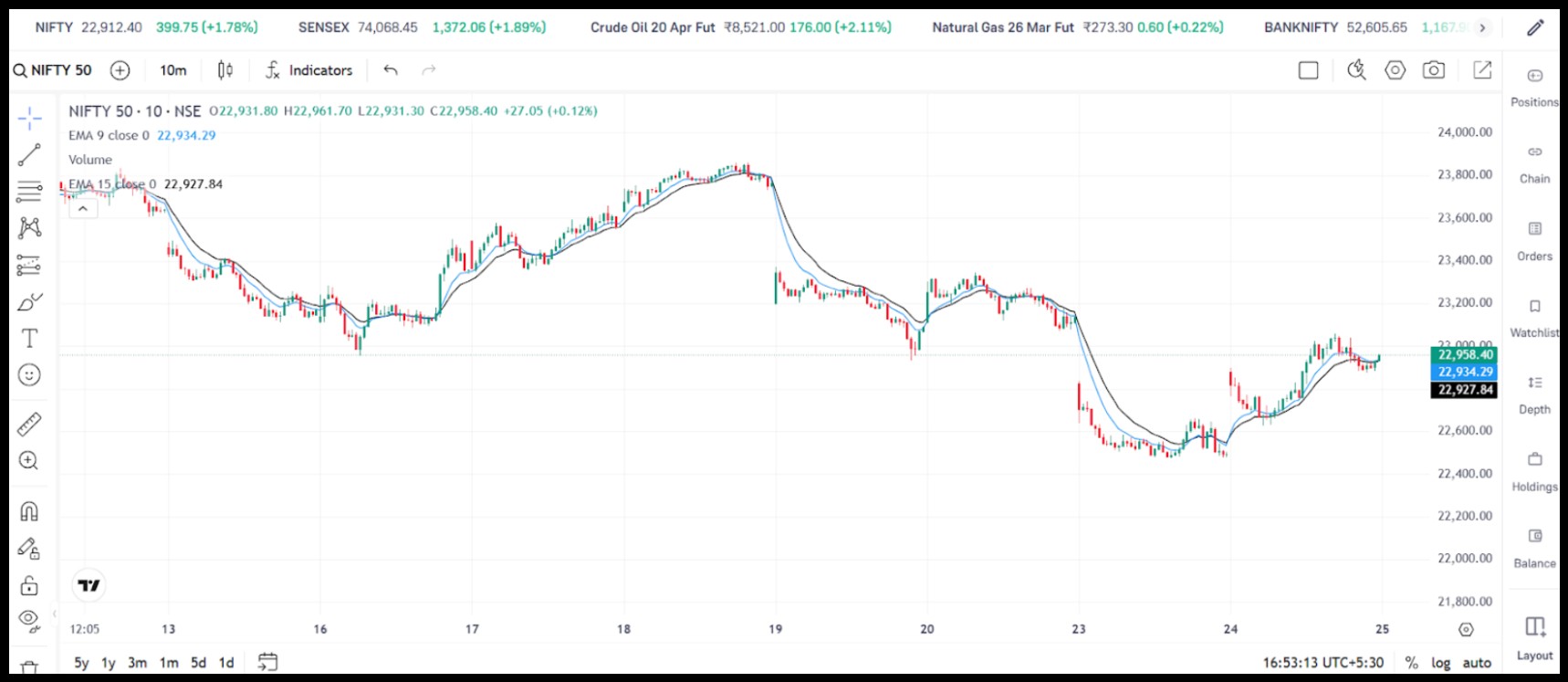
In the NIFTY 50 10-minute chart, a clear long unwinding phase appears between the 19th and 23rd. After a strong rally into the 18th, the price fails near the highs around 23,800 and begins a steady decline.
The fall is gradual, with lower highs forming, showing weakening bullish momentum rather than aggressive selling. This behavior indicates that earlier buyers are closing positions to book profits.
The absence of a sharp crash suggests it is not a short build-up but a controlled unwinding. This phase reflects a temporary correction where bulls exit quietly, leading to a slowdown in the trend before the next directional move.
What Does Long Unwinding Indicate?
When you successfully identify long unwinding, it tells you several things about the market’s health:
- Weakening Momentum: The previous bullish trend has lost its “fuel.”
- Absence of Fresh Buyers: No new money is coming in to support higher prices.
- Temporary Correction: It suggests the market is “cooling off” rather than entering a permanent bear phase.
- Profit Booking: It indicates that the “Smart Money” is satisfied with their current gains and is moving to cash.
Difference Between Long Unwinding and Short Build Up
Both scenarios result in a falling price, but the data behind them is completely different:
|
Feature |
Long Unwinding | Short Build Up |
| Price Action | Decreasing (Falling) |
Decreasing (Falling) |
|
Open Interest (OI) |
Decreasing (Old buyers leaving) | Increasing (New sellers entering) |
| Market Sentiment | Passive / Profit Booking |
Aggressive / Bearish |
|
Market Intensity |
Low to Moderate | High and Violent |
| Implication | A temporary dip |
A potential major crash |
How to Trade When You See Long Unwinding?
Even experienced traders make mistakes during long unwinding. To handle this phase correctly, you need a clear plan and the right long unwinding strategy to stay on the right side of the market:
- Avoid Fresh Long Positions: The bullish momentum is weakening, so entering new buy trades can lead to getting trapped.
- Book Profits on Existing Longs: If you are already in profit, this is the phase where smart traders exit and protect gains.
- Do Not Panic Short Immediately: Long unwinding is not aggressive bearishness, so avoid jumping into shorts without confirmation.
- Look for Weak Bounces to Sell (Advanced): Small pullbacks during the fall can offer low-risk shorting opportunities if the trend remains weak.
- Wait for Price Stabilization: Let the market complete its unwinding phase before planning the next move.
- Re-enter Only on Long Build Up: Consider fresh buying only when the price starts rising again with increasing Open Interest.
- Focus on Key Levels: Watch support zones. If the price holds, the market may consolidate instead of falling further.
- Keep Targets Realistic: Moves during long unwinding are usually moderate, not explosive, so manage expectations accordingly.
Common Mistakes While Identifying Long Unwinding
Most traders misread long unwinding because they ignore data. Avoid these mistakes:
- Confusing it with Short Build-Up: Falling price alone is not enough, check OI
- Ignoring Open Interest: Without OI, you are just guessing
- Panicking Like It’s a Crash: Long unwinding is usually controlled, not violent
- Entering Shorts Too Early: The move may not be strong enough
- Buying the Dip Too Soon: Momentum is still weak
- Ignoring Resistance Zones: Most unwinding starts from key levels
- Overtrading During Expiry: Expiry moves can be misleading
Conclusion
The market always leaves clues, but only the right traders know where to look.
Long unwinding is one of those clues hiding inside Open Interest data every single day. Once you learn to read price and OI together, dips will never confuse you again.
The traders who stay calm during a fall are the ones who understand what is happening. That understanding is what separates consistent traders from those who keep making the same mistakes.
If you are serious about reading the market correctly, take the next step with our stock market classes and start learning how smart money actually moves.
FAQs
Q1: Where can traders track open interest data to identify long unwinding?
Ans: Traders can track open interest data on platforms like the NSE India website, trading terminals, and option chain tools such as Sensibull, Moneycontrol, or other derivatives analysis platforms.
Q2: What is the best way to confirm long unwinding in a stock or index?
Ans: The best confirmation is a simultaneous fall in both price and Open Interest across two or more sessions. If volume is also moderate and not spiking, it strongly confirms long unwinding rather than aggressive selling.
Q3: How to identify long unwinding versus short build up in live markets?
Ans: Check the Change in OI column in futures data. A falling price with falling OI means long unwinding, while a falling price with rising OI means short build up.
Before investing capital, invest your time in learning Stock Market.
Fill in the basic details below and a callback will be arranged for more information: