


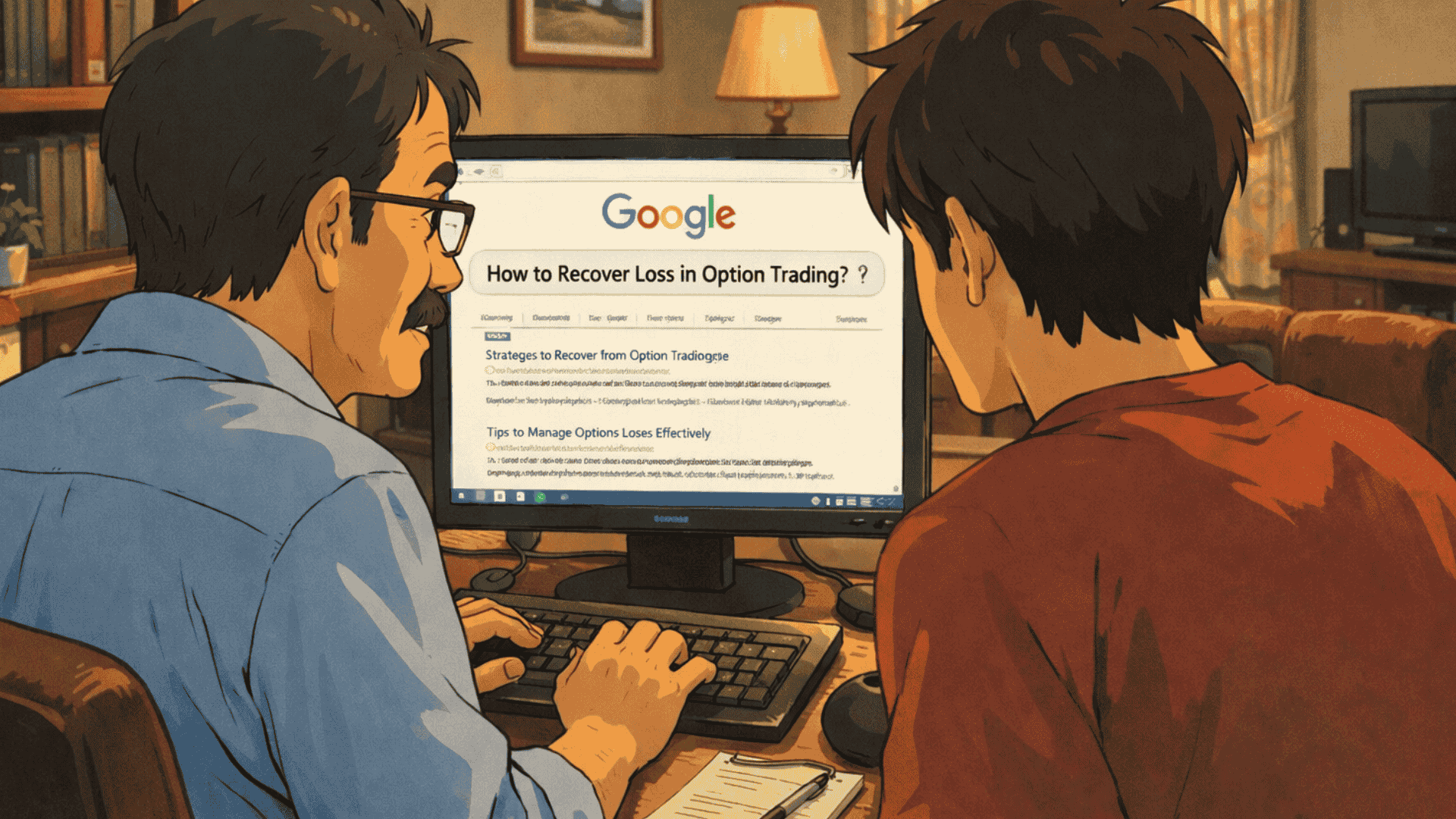
Faced losses in options and now looking for ways how to recover loss in option trading?
If you are looking for shortcuts, then here’s the truth: there is no shortcut, hack, or guaranteed method to recover losses overnight.
In fact, if you are looking for one, then you will end up making more losses.
Want to know why?
Let’s get into the details, first to uncover the reasons behind losses and then ways that can help you get out of them.
It starts with acknowledging the dark side of options trading, the reality of high leverage, time decay, and psychological traps that catch most retail traders off guard.
Why Loss in Option Trading?
Many traders enter the options market lured by stories of quick riches.
But soon, they realize that this is a high-risk arena where wrong psychology can turn even the right trades into loss-making ones.
Many beginners focus only on how to do option trading in terms of strategy and indicators, but they ignore the most important part, mindset and risk control.
Here are 3 common psychological traps that lead to loss accumulation:
- Overtrading: After a few wins, beginner traders become overconfident. They increase their lot size, take multiple trades, and violate position sizing rules.
- Greed to Earn More When Right: A winning trade often turns into a loss because traders don’t book profits on time. They want to squeeze the last rupee out of the market.
- Revenge Trading After a Loss: Trying to recover losses by forcefully entering another trade, without proper analysis, is a recipe for disaster. This is not trading, it’s emotional gambling.
Ways to Recover Losses in Option Trading
Let’s replace the word “recover” with “reset”. Because recovery is not about doubling your capital quickly, it’s about reprogramming your trading behavior.
Here are practical steps to reset your approach and slowly work your way back:
1. Stop Trading for a While
Take a break. This gives you the space to reflect, reassess your mistakes, and calm your trading mind. Jumping into trades just to recover losses usually backfires.
2. Assess Your Past Trades
Audit your past trades:
- What went wrong?
- Were the losses due to poor analysis or poor execution?
- Did you follow your own rules?
You’ll often find the issue wasn’t the strategy; it was you breaking your own rules.
3. Set Realistic Goals
Don’t aim to recover 1 lakh in a week. Instead, aim to reduce your losses by following proper discipline in trading. Like one trade a day, no more trades if SL is hit.
4. Position Sizing & Risk Management
Start small. Risk only 1-2% of your capital per trade. Don’t take trades just because you “feel” something. Build a rule-based approach.
5. Focus on Process, Not Outcome
Every trade should follow a defined process, entry criteria, stop-loss, target, and exit plan. Focus on executing the process, not the money you’ll make.
6. Learn to Sit on Cash
The best trade is sometimes no trade. Don’t enter the market every day. Wait for clear setups.
7. Accept That Some Trades Will Go Wrong
Losses are part of the game. Even the best traders have losing trades. What separates them from the rest is how they manage those losses.
What are the 4 Stages of Loss in Trading?
Losses in trading don’t usually happen in a single bad trade. They unfold in stages, and most traders don’t even realize when they’re slipping from one stage to another.
Stage 1: Denial
You refuse to accept that the trade idea is wrong. You hold onto losing positions, hoping the market will reverse.
Stop-loss gets shifted. Logic slowly disappears.
Stage 2: Emotional Disturbance
After a few losses, frustration builds. Confidence drops. You start doubting your strategy, your skills, and sometimes even the market itself.
Stage 3: Revenge Trading
This is where real damage happens. You increase position size to recover quickly. Trades are taken without proper setups.
Risk management is ignored in the name of “recovery.”
Stage 4: Acceptance or Account Damage
Either you step back, reflect, and decide to rese,t or your capital shrinks to a level where the market forces you to stop.
Understanding these stages helps you catch the problem early and regain control before losses compound further.
Option Trading Mentorship
Look for the smarter way to recover losses.
Even if you have years of experience in the stock market but fail to earn money in options, then maybe there is nothing wrong with your analysis or strategy, but rather a mindset that focuses on earning quick gains.
Many traders secretly wonder, can option trading make you rich?
The honest answer is: it can create wealth, but only for those who approach it with discipline, patience, and structured risk management, not with a shortcut mentality.
That’s why beginners must first understand that options trading is a highly specialized skill involving complex instruments and high volatility, and without the right foundation, it can quickly become overwhelming instead of rewarding.
That’s where mentorship plays a key role.
A good mentor doesn’t just teach you strategies; they help you develop psychological discipline, avoid overtrading traps, and build a trading system that suits your personality and risk appetite.
If someone still doubts and asks, is option trading gambling?, the answer depends on how you approach it.
When trading is done with proper analysis, risk management, and discipline, it is not gambling but a structured financial activity.
If you’re serious about turning around your trading journey, investing in the right mentorship can be a game-changer.
It’s not about picking the next hot option trade; it’s about learning how to think, plan, execute, and manage risk like a professional.
A structured options trading mentorship helps you:
- Understand when not to trade
- Build strategies backed by logic and data
- Control risk on every trade
- Stay accountable to your rules
- Replace impulsive decisions with a process-driven approach
When you learn under the right guidance, you stop focusing on quick recovery and start building long-term consistency.
Final Thoughts
If you’ve faced a big loss in option trading, don’t look for a shortcut.
The real recovery lies in building habits that protect your capital, not in risking more to win it all back.
Your trading journey changes the day you stop focusing on revenge or recovery and start focusing on discipline and consistency.
You don’t need a new strategy.
You need a new mindset and perhaps a mentor who can show you the way forward.
And if you feel you need structured guidance to rebuild the right way, you can consider joining our option trading classes to learn with clarity, discipline, and a process-driven approach.
Before investing capital, invest your time in learning Stock Market.
Fill in the basic details below and a callback will be arranged for more information: