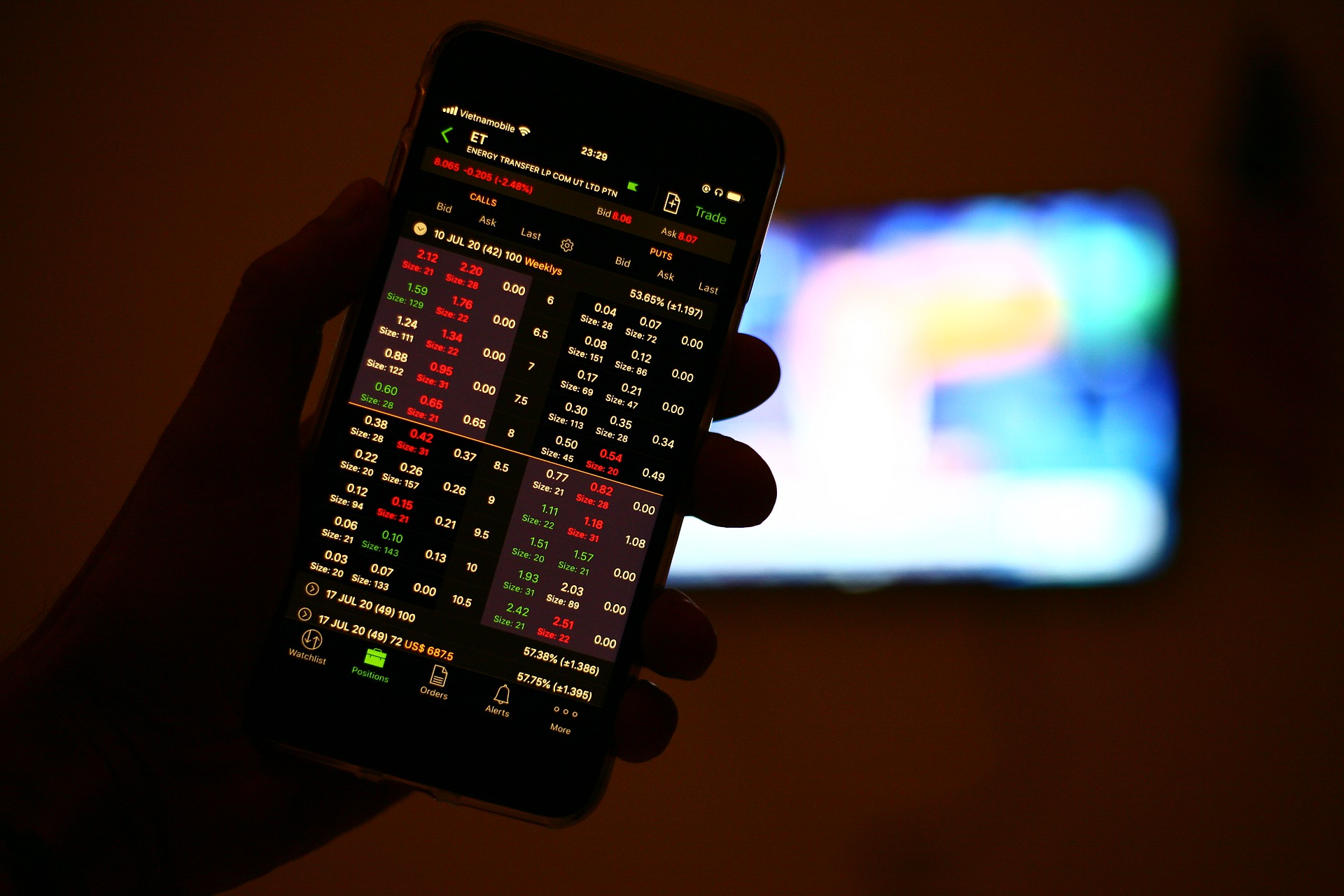



In recent years, the Indian stock market has seen a huge rise in retail traders, especially in options trading.
From college students to retirees, everyone is chasing “financial freedom” and asking, can option trading make you rich?
Social media glorifies overnight profits, luxury lifestyles, and so-called foolproof strategies. But behind the flex, there is a dark side of options trading.
For most retail traders, options are less a wealth-creation tool and more a fast track to capital loss. Originally designed for hedging by institutions, options are now marketed as shortcuts to quick riches.
In reality, complex mathematics, time decay, and professional dominance make the game brutally unforgiving for the uninformed majority.
In this blog, we uncover 11 dark secrets of options trading that most brokers, influencers, and trading courses never talk about.
These hidden realities reveal why the odds are stacked against retail traders and how easily capital can disappear without proper knowledge and discipline.
11 Dark Secrets of Options Trading
If you are currently trading or planning to enter the F&O segment, you must understand the following 11 hidden truths.
These are the option trading dark secrets that your favourite YouTube guru will never tell you because their business model depends on your ignorance.
1. 93% of Traders are in Net Losses
The most terrifying dark truth of options trading is backed by hard data from the Securities and Exchange Board of India (SEBI).
A comprehensive study revealed that a staggering 93% of individual retail traders in the equity F&O segment incurred net losses between FY22 and FY24.
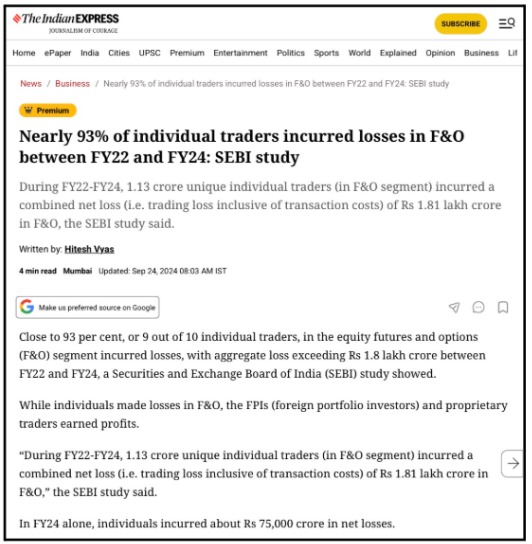
On average, each loss-making trader lost over ₹1.2 lakh. This isn’t just a “bad day” at the office; it is a systematic transfer of wealth from retail pockets to institutional coffers.
This statistical graveyard is the foundation of the dark side of options trading.
2. The “Fake Finfluencer or Fake Gurus” Scam
One of the most prominent options trading dark secrets is the rise of the “Fake Guru.” These individuals showcase luxury lifestyles to lure people into expensive courses.
A classic example is Avadhut Sathe and his “Avadhut Sathe Trading Academy” (ASTA).
SEBI recently cracked the whip on Sathe, ordering the recovery of a massive ₹546.2 crore for providing unregistered investment advice and selling courses.
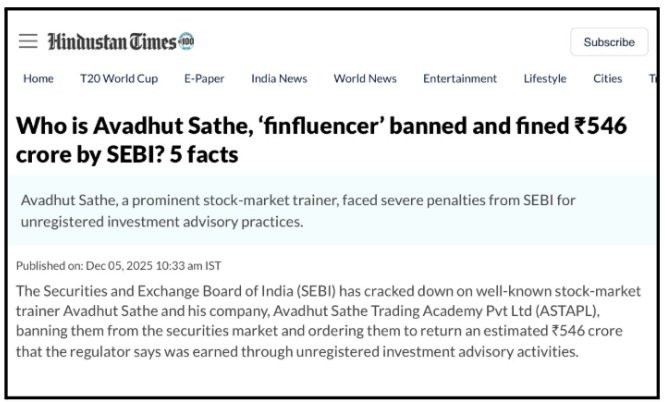
While he claimed to teach students how to become wealthy, SEBI’s investigation revealed that he selectively showcased profitable trades of students while hiding the massive losses incurred by others.
Shockingly, even Sathe himself was reportedly in a net trading loss while collecting hundreds of crores in course fees.
Similarly, Mohammad Nasiruddin Ansari, popularly known as “Baap of Chart,” was banned by SEBI and ordered to refund ₹17.2 crore.
While he promised “sure-shot” profits to his followers, his own trading records showed a net loss of ₹2.89 crore.
3. The Brokerage and Tax Trap
In the Indian market, even if your trade breaks even, you are still a loser. The government and brokers are the silent predators on this side of options trading.
Between Securities Transaction Tax (STT), Stamp Duty, Exchange Charges, GST, and SEBI turnover fees, the “cost of carry” is astronomical.
For a small trader with a capital of ₹50,000, over-trading can lead to a situation where they pay ₹10,000 to ₹15,000 in brokerage and taxes annually.
Even if your P&L is zero, your capital is slowly bleeding out to the “house.”
4. Theta Decay
A major downside of options trading is that time is your enemy if you are an option buyer.
Unlike equity investing, where a flat stock costs you nothing, an option contract loses value every day the market stays still. This is the silent killer.
Because of option trading time decay, the probability of an “out-of-the-money” (OTM) contract expiring worthless is over 90%.
When you buy an option, you aren’t just betting on the right direction; you are betting against a clock that never stops ticking.
5. The “IV Crush” Nightmare
Many traders try to play big events like the Union Budget or the Election Results. They buy options, thinking high volatility will lead to big profits. However, they often fall victim to the “IV Crush.”
A recent example was the June 4, 2024, Election Result day. Before the results, Implied Volatility (IV) was at extreme highs, making option premiums very expensive.
As soon as the results were clear, the uncertainty vanished, causing IV to collapse. Even if the market moved in the trader’s direction, the premium crashed so fast that they still lost money.
6. The Dopamine Loop
Options trading in India has moved from a financial activity to a form of clinical gambling. The “Hero or Zero” trades on expiry days (Nifty on Thursday, Bank Nifty on Wednesday) provide a dopamine rush similar to a casino slot machine.
If you find yourself unable to step away from the screen, you must learn how to stop option trading addiction. before it destroys your personal life.
Traders spend their days staring at 1-minute charts, experiencing extreme highs and lows. This psychological addiction is the dark side of options trading that destroys families and mental peace.
Many young Indians are losing their career focus and social lives to the “rush” of Bank Nifty scalping.
7. HFT and Algo Domination
When you place a trade on your mobile app, you are competing against High-Frequency Trading (HFT) firms and sophisticated AI algorithms.
These institutional bots can execute thousands of orders in a millisecond. They use “Stop-Loss Hunting” techniques to trigger retail exits before moving the price in the original direction.
You are fighting a war with a stick against an enemy with heat-seeking missiles.
8. Black Swan Events and Risk
While buying options limits your loss to the premium paid, “Selling” options (Option Writing) carries unlimited risk.
High option trading margin requirements exist for a specific reason: to protect you from the catastrophic volatility of a “gap down” that could leave you in massive debt to your broker.
A “Black Swan” event, such as the March 2020 COVID crash or the sudden June 4th market crash, can cause a stock to “gap down” by 10% or 20% overnight.
If you have sold naked Puts, your losses can exceed your total account balance, leaving you in debt to your broker.
9. The Zero-Sum Game
The options market is a zero-sum game. For every ₹1,000 you make, someone else loses ₹1,000 (plus taxes).
In this environment, you are essentially trying to take money out of the pocket of a hedge fund manager or a seasoned professional with decades of experience.
Retail traders are often referred to as “Liquidity” or “Exit Liquidity” by the big players.
10. The Psychological Health Hazard
The mental toll of watching your hard-earned savings vanish in minutes is devastating. Thousands of Indian traders suffer from chronic anxiety, insomnia, and depression due to trading losses.
The constant stress of managed “floating losses” leads to a poor quality of life.
This hidden health crisis is a significant part of the overlooked dangers of options trading that is rarely discussed in popular trading forums.
11. Liquidity and Slippage in Stock Options
While Nifty is liquid, most individual stock options in India have poor liquidity. When you try to exit a large position during a panic, you might find that there are no buyers at your desired price. This is called “Slippage.”
You might want to sell at ₹10, but the nearest buyer is at ₹7.
This hidden cost can turn a manageable loss into a catastrophic one, showing the negative side of options trading.
Conclusion
The dark side of options trading is a vast landscape of hidden risks, psychological traps, and predatory behaviour.
While the promise of quick money is the hook, the reality is a rigorous, mathematical grind where the vast majority of participants fail.
If you choose to trade options, you must do so with extreme caution, absolute discipline, and the understanding that you are competing in the most difficult game in the world.
Never follow the advice of unverified finfluencers who promise guaranteed returns. The dark truth of options trading is that there are no shortcuts.
To survive, you must prioritise the preservation of your capital over the pursuit of profit. This is why you must take the time to truly learn options trading from a structural and risk-first perspective.
The market does not care about your dreams or your financial needs; it only cares about the data.
If you want to navigate these risks safely, seeking a professional option trading mentorship can provide the guidance needed to avoid the common retail traps.
Respect the dark side of options trading, or it will consume your savings and your peace of mind before you even realise what happened.
Stop gambling with your savings and start trading with an edge.
Join our professional classes in option trading to master risk management and professional strategies today!
FAQs
Q1: Can you trade options at night?
Ans: In India, equity and index options are traded during regular market hours (9:15 AM to 3:30 PM).
However, some international markets allow overnight options trading. Always check the exchange rules before planning after-hours strategies.
Q2: Which option trading is best?
Ans: There is no single “best” option strategy. The right approach depends on your risk appetite, capital, and market view.
Beginners often start with simple strategies like buying calls or puts, but risk-managed strategies usually work better long term.
Q3: Why do most retail traders lose money in options trading?
Ans: Most retail traders underestimate time decay, volatility shifts, and the role of institutional players.
Emotional trading, over-leverage, and lack of proper risk management also contribute significantly to consistent losses.
Q4: Is options trading safe for beginners?
Ans: Options trading is complex and highly risky. Without understanding Greeks, position sizing, and probability, beginners can face rapid losses.
Proper education and strict risk control are essential before entering this segment.
Q5: How can you reduce risk in options trading?
Ans: Risk can be reduced by using stop-loss orders, avoiding over-leverage, trading with a clear strategy, and focusing on capital preservation instead of quick profits.
Discipline matters more than prediction accuracy.
Before investing capital, invest your time in learning Stock Market.
Fill in the basic details below and a callback will be arranged for more information: