



Interest rates are one of the most powerful forces shaping financial markets.
Set by central banks, like the Reserve Bank of India (RBI) or the US Federal Reserve, these rates determine the cost of borrowing money throughout the economy.
When central banks adjust interest rates, the effects ripple across every asset class, from bonds and real estate to equities.
For stock market investors, understanding this relationship is essential for making informed decisions.
How Do Interest Rates Affect the Stock Market?
Interest rates influence the stock market through several interconnected channels:
- Cost of borrowing – When rates are low, companies can borrow cheaply to expand operations, invest in new projects, and hire more workers. This fuels growth and typically boosts stock prices. Higher rates make borrowing expensive, squeezing profit margins.
- Consumer spending- Lower rates mean cheaper loans for homes, cars, and credit cards. Consumers spend more, which benefits companies and lifts their stock valuations. Higher rates have the opposite effect.
- Valuation models – Stock prices reflect the present value of future earnings. Higher interest rates increase the “discount rate” used in these calculations, making future profits worth less today. This particularly affects growth stocks, which rely heavily on distant future earnings.
- Opportunity cost – When interest rates rise, safer investments like fixed deposits and bonds become more attractive. Some investors shift money out of stocks into these alternatives, putting downward pressure on equity prices. This behavior often varies depending on the types of investors in the stock market, as risk appetite differs between retail and institutional participants.
These factors often work alongside other triggers like the impact of quarterly results on share price, which can amplify market movements during rate cycles.
Now that we know the channels, let’s look at what actually happens when rates go in each direction.
Market Implications of Falling Interest Rates
When central banks cut interest rates, stock markets generally respond positively:
- Bullish sentiment – Investors anticipate stronger corporate earnings and economic growth
- Increased liquidity – Cheaper borrowing floods the market with more investable capital
- Sector rotation to growth stocks – Technology, real estate, and consumer discretionary sectors tend to outperform
- Risk appetite rises – Investors move away from safe assets toward equities for better returns
- Higher valuations – Lower discount rates justify paying more for stocks
Rate cuts often signal that the central bank wants to stimulate a slowing economy, so markets tend to rally in anticipation of recovery.
But rate cuts don’t last forever. Here’s what investors face when the RBI shifts to tightening.
Impact of Rising Interest Rates
When central banks raise interest rates, the stock market often faces headwinds as investors grow cautious about slowing economic growth and tighter financial conditions.
Higher borrowing costs reduce liquidity in the system, meaning less money flows into equities and other riskier assets.
This shift often highlights why traders fail in the stock market environments that are no longer supported by “easy money.”
Without the cushion of low interest rates, traders who rely on guesswork rather than strict risk management often find their portfolios bleeding as volatility rises and speculative stocks crash.
At the same time, there is a noticeable flight to safety, with capital moving into bonds, gold, and other fixed-income instruments that start offering more attractive yields.
Rising rates also lead to valuation compression, particularly impacting high-growth stocks whose expected profits lie far in the future, as their present value declines.
However, it is important to note that moderate rate hikes during a strong economic phase can signal confidence in growth.
In such cases, the positive impact of GDP on stock market performance can sometimes outweigh the negative pressure of rising borrowing costs.
On the other hand, some global events like the impact of war on stock market can also influence inflation and interest rate decisions, indirectly affecting equities.
These dynamics aren’t abstract; India’s own recent history gives us a clear before-and-after picture.
Interest Rate Indicators Every Indian Stock Investor Should Track
Stay ahead of interest rate movements by monitoring these signals:
| Indicator | Why It Matters |
| RBI Monetary Policy Meetings | Direct announcements on repo rate changes and future guidance |
| Inflation (CPI) | High inflation pressures the RBI to raise rates; low inflation creates room for cuts |
| 10-Year G-Sec Yield | Bond yields reflect market expectations for future interest rates |
| US Federal Reserve Policy | Global capital flows respond to Fed decisions, affecting Indian markets indirectly |
| Credit growth data | Shows how rate changes are actually affecting borrowing and spending |
Impact of RBI Rate Changes on Indian Stock Market: Real Examples
The Indian market offers clear illustrations of how interest rate policy shapes stock performance.
1. RBI Rate Cuts During COVID (2020)
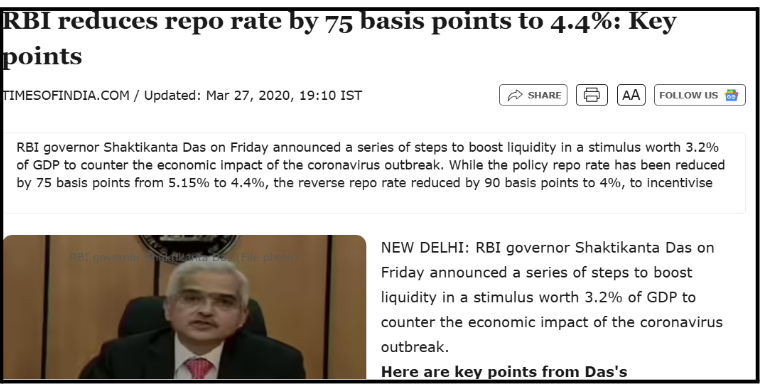
As the pandemic hit, the Reserve Bank of India aggressively reduced the repo rate from 5.15% to 4.0% in multiple steps.
This rapid monetary easing, combined with massive foreign institutional investor (FII) inflows, global liquidity from the US Federal Reserve’s stimulus, and a broader risk-on sentiment worldwide.
This helped the Nifty 50 recover sharply from its March 2020 crash and rally to record highs by late 2021. RBI rate cuts were one contributing factor, not the sole driver
2. Rate hikes to control inflation (2022-2023)
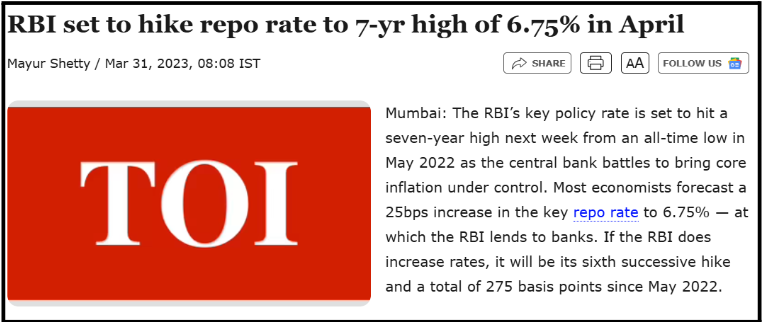
When inflation surged above 7%, the RBI reversed course and raised rates by 250 basis points.
Markets experienced temporary corrections and increased volatility, particularly in rate-sensitive sectors like real estate, auto, and banking.
Conclusion
The impact of interest rates on the stock market is one of the most consistent forces in investing. When borrowing gets cheaper, capital flows toward growth, and when rates rise, investors retreat to safety.
Understanding this dynamic doesn’t just help you explain market swings after the fact. It helps you anticipate them and highlights the advantages of stock market prediction when macro signals are used correctly.
For Indian investors, the RBI’s repo rate decisions, CPI inflation data, and even the US Federal Reserve’s moves are not distant economic events. They directly shape the valuation of every stock in your portfolio.
The investors who truly understand the impact of interest rates on the stock market are the ones who track these signals proactively and make decisions from clarity, not panic.
The next time the RBI announces a rate change, you’ll know exactly which sectors to watch, which to be cautious about, and why the market is reacting the way it is.
Want to build this kind of market instinct from the ground up? Stock Pathshala walks you through real RBI rate cycles, historical Nifty 50 data, and how to apply macro signals to your own portfolio, step by step.
Take the next step in your learning with our stock market classes, where we simplify the basics and provide practical guidance.
FAQs
Q1: What are interest rates, and who sets them in India?
Ans: Interest rates represent the cost of borrowing money. In India, they are primarily set by the Reserve Bank of India through its monetary policy decisions, especially the repo rate.
Q2: Why do stock markets rise when interest rates fall?
Ans: When interest rates fall, borrowing becomes cheaper, businesses expand more easily, and consumers spend more. This leads to higher corporate earnings and increased investor confidence, pushing stock prices upward.
Q3: How do rising interest rates impact stock prices?
Ans: Rising interest rates increase borrowing costs, reduce liquidity, and make safer investments like bonds more attractive. As a result, stock markets may face downward pressure or increased volatility.
Q4: Which sectors benefit the most from low interest rates?
Ans: Sectors like real estate, automobiles, and technology tend to perform well when rates are low because they rely heavily on borrowing and consumer spending.
Banking stocks benefit from low rates through higher loan demand and credit growth, though their profit margins (net interest margins) are actually stronger when rates are higher.
Q5: Which sectors are more resilient during high interest rates?
Ans: Defensive sectors such as utilities, healthcare, and consumer staples generally perform better during high-interest-rate periods because their demand remains stable regardless of economic conditions.
Q6: How do interest rates affect stock valuation?
Ans: Interest rates influence the discount rate used in valuation models. Higher rates reduce the present value of future earnings, leading to lower stock valuations, especially for growth stocks.
Before investing capital, invest your time in learning Stock Market.
Fill in the basic details below and a callback will be arranged for more information: