


Is BTST trading profitable for retail traders, or can overnight market movements turn a winning trade into a loss?
BTST trading offers opportunities, but overnight gaps, trading costs and risk management play an important role in determining your actual returns.
Let’s understand the numbers, risks and trading discipline behind BTST.
Is BTST Trading Profitable for Retail Traders?
BTST profit is not built into the method. It depends on three things you control: what you select, how you control risk, and how well you handle costs.
Two traders can use the same BTST idea and get opposite results. The difference is rarely the idea. It is usually the discipline behind it.
If you are comparing trading styles, understanding is intraday trading profitable can help you evaluate how different trading methods perform.
No method guarantees profit. Anyone who shows you a fixed BTST formula is selling comfort, not facts.
How Do Overnight Gaps Affect BTST Trading Profits?
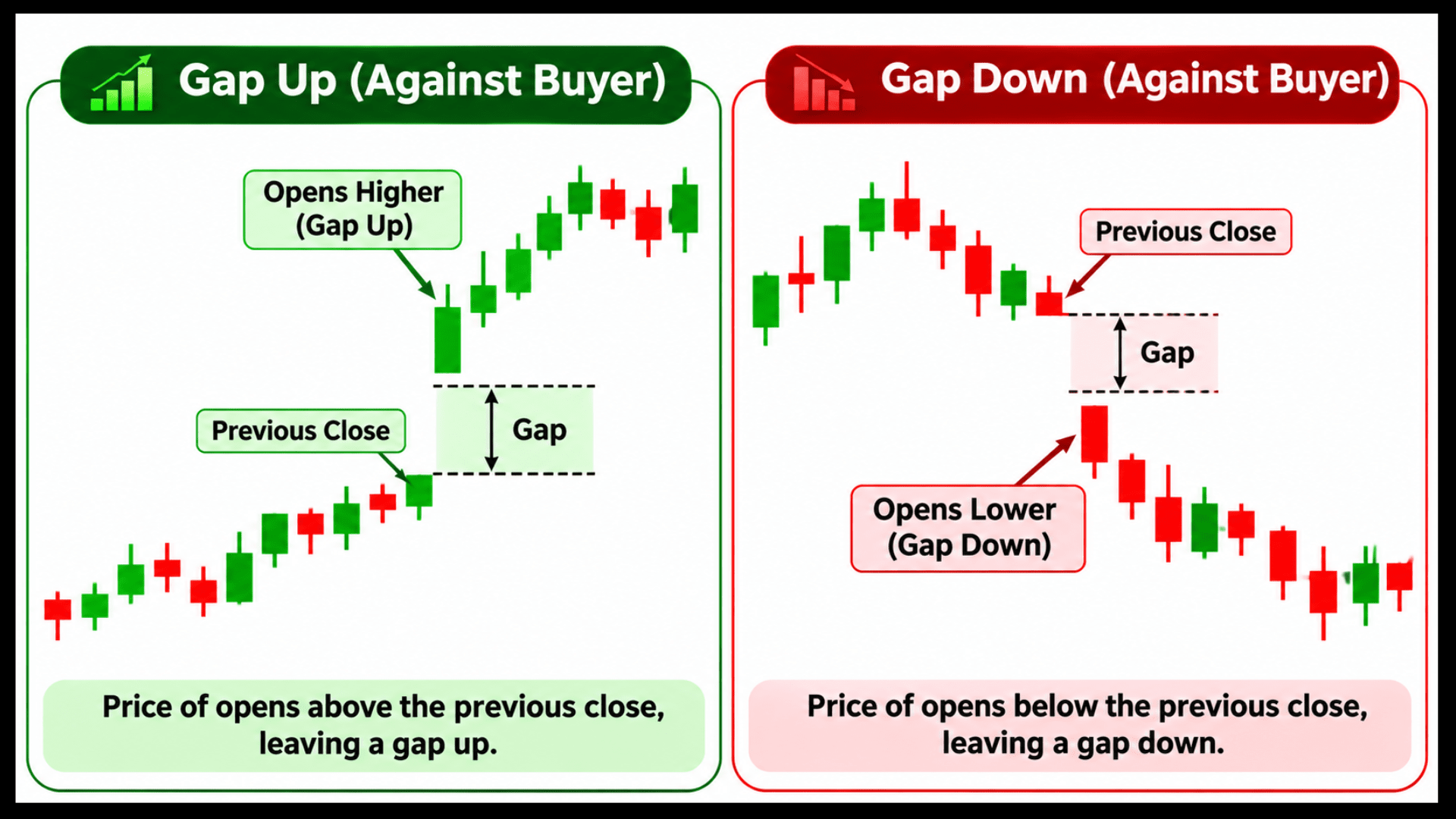
BTST trading involves holding a position overnight, which means you cannot react to market movements while the market is closed.
The next morning, the stock can open higher, lower or flat. You do not control that opening.
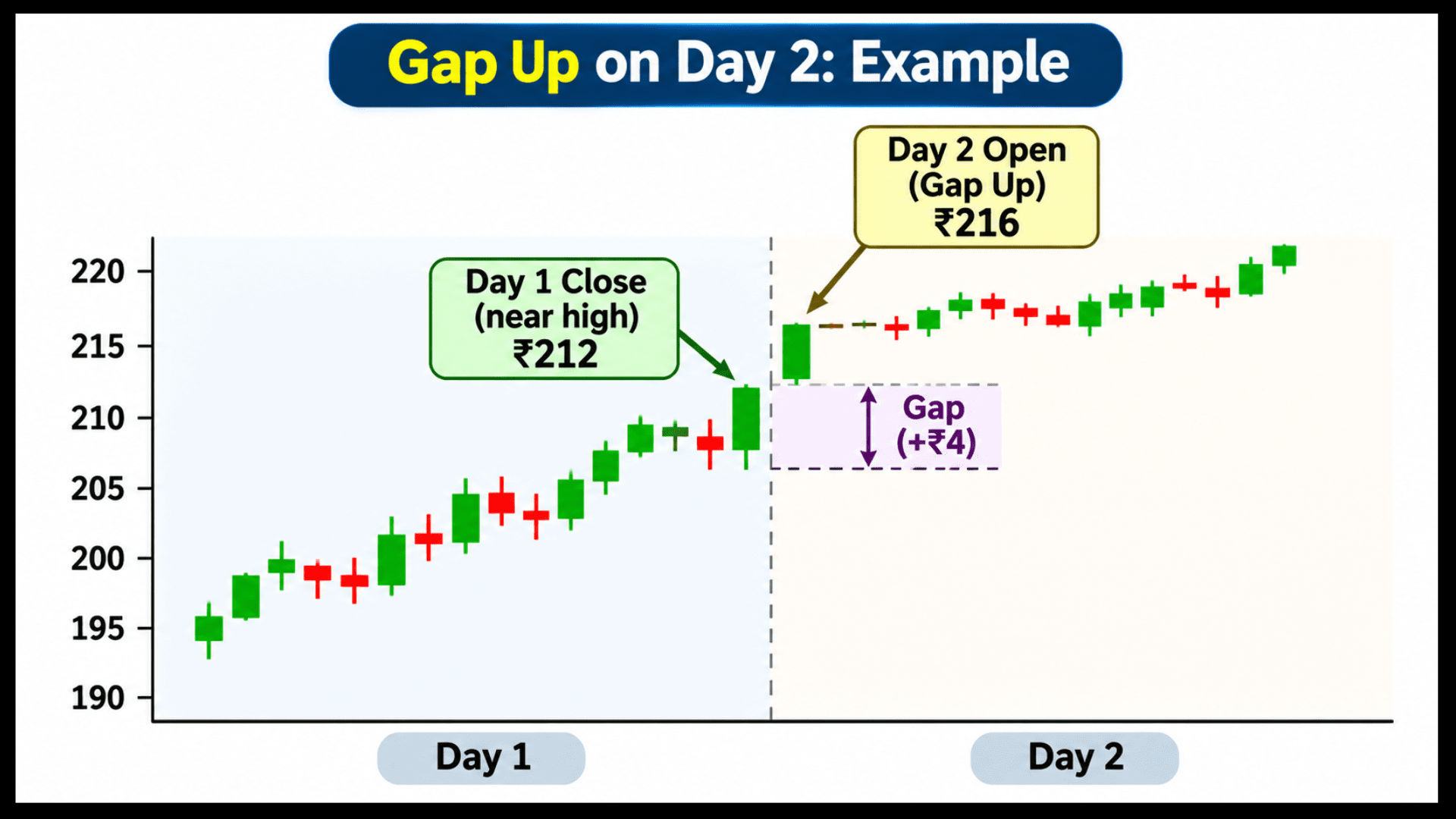
A gap in your favour feels like a free gift. However, a gap against you can jump right over your planned stop loss.
The three cases look like this:
- Gap in your favour: You can book the move at the open or trail your exit.
- Flat open: The trade depends on how the first hour develops.
- Gap against you: The loss can be bigger than the loss you planned.
Many beginners remember only the first case. That is why BTST looks easier than it is.
What Are the Biggest BTST Trading Risks?
Is BTST safe? It is not riskier than every other style, but its risks are different from intraday trading.
The main challenge is that you cannot act while the market is closed.
News can arrive after market hours. Global markets can move overnight. Company results, policy updates and sudden events can all change the opening price.
The common risks include:
- Overnight gap risk: The open can ignore your stop loss.
- Event risk: Results, announcements or global news after the close.
- Liquidity risk: Weak stocks can open with wide gaps and thin volume.
- Emotional risk: Holding a loser for one more day turns BTST into hope.
If you want to understand how trading mistakes affect your capital, read why people lose money in intraday trading. Many of these habits also apply to BTST.
What Are the Charges and Costs in BTST Trading?
Trading costs can quietly reduce your BTST profits, especially when your average gain per trade is small.
Since you take delivery-type positions, the charges and taxes are usually handled differently from intraday trades.
In general, you can expect:
- Brokerage or platform fees.
- Exchange and regulatory charges.
- Government levies.
- Applicable taxes.
Some charges apply on both buy and sell sides.
Taxes also matter. Gains from such trades may be treated differently depending on your situation, so speak to a tax professional.
Because rules and rates change, verify BTST charges on your broker’s official charge page and the exchange websites.
The key point is simple. If your average gain per trade is small, costs can take a big share of it. Small edges disappear fast after charges.
How Does Win Rate and Risk Reward Ratio Affect BTST Profit?
Many beginners chase a high win rate. But profit depends on win rate and risk reward together.
A trader who wins less often can still do well if the winners are bigger than the losers.
The table below shows 10 trades with a fixed risk of ₹1,000 per trade. It is for illustration only, before costs, and not a promise of results.
| Risk : Reward | Win Rate 40% | Win Rate 50% | Win Rate 60% |
|---|---|---|---|
| 1:1 | -₹2,000 | ₹0 | ₹2,000 |
| 1:1.5 | ₹0 | ₹2,500 | ₹5,000 |
| 1:2 | ₹2,000 | ₹5,000 | ₹8,000 |
Read this carefully. At a 1:1 ratio, even a 50% win rate only reaches zero. After costs, it turns negative.
Gaps can make a real loss bigger than ₹1,000, so real results are slightly worse.
Now look at the break-even win rate for each ratio. Again, this is for illustration only and ignores costs.
| Risk : Reward | Break-Even Win Rate |
|---|---|
| 1:0.5 | 66.7% |
| 1:1 | 50% |
| 1:1.5 | 40% |
| 1:2 | 33.3% |
| 1:3 | 25% |
So, a better ratio lowers the win rate you need.
To understand how to calculate your potential profit against risk, explore risk reward ratio in intraday trading. The same logic applies to overnight trades.
What Is the Best BTST Trading Strategy?
Many traders search for a BTST trading formula that works every time. However, no single formula guarantees profit.
Instead, use a checklist to avoid weak trades and evaluate potential opportunities.
| Check | What to Look At | Why It Matters |
|---|---|---|
| Trend | Is the stock in a clear uptrend on the daily chart? | Trades with the trend have better odds. |
| Volume | Is today’s volume higher than usual? | Strong volume shows real interest. |
| Closing strength | Does it close near the day’s high? | Buyers held control till the end. |
| News and event risk | Any results or announcements due? | Events can cause large gaps. |
| Stop-loss plan | Do you know your exit before buying? | Prevents emotional decisions. |
The table covers the setup. Now the exit plan matters equally, because most BTST damage happens the next morning.
Decide your stop loss and target before you buy. After the open, follow the plan instead of reacting to every candle.
If you are unsure about setting an exit level, understand what should be the stop loss for intraday trading.
Which Time Frame Is Best for BTST Trading?
There is no single best time frame for BTST trading. Most traders use the daily chart to judge the trend and a lower time frame to check the closing hour.
The closing hour matters most because it shows whether buyers stayed strong. A late spike can mislead, so compare it with the full day.
For practical examples, understand which time frame is best for BTST.
What Are the Common BTST Trading Mistakes That Reduce Profits?
Most BTST losses come from a few repeated mistakes. They are not always about bad luck. They often come from rushing.
These are the usual ones:
- Buying late in the day without a plan: The trade becomes a guess.
- Ignoring event risk: Holding through results or big announcements.
- Putting too much capital in one trade: One gap can hurt the account.
- Moving the stop loss: Turning a small loss into a large one.
- Treating a failed intraday trade as BTST: This is a common trap.
Sizing your trade properly reduces many of these problems. Learn position sizing for intraday trading to understand how to limit the damage from any single trade.
Who Should Avoid BTST Trading?
BTST is not for everyone. If holding a position overnight makes you anxious, this trading style may not suit you.
Think twice if any of these situations fit you:
- You cannot afford to lose the money you use.
- You tend to panic when the market opens against you.
- You trade without a stop loss or written rules.
- You are still learning the basics of charts and risk.
If this sounds like you, practise with small positions or paper trades first.
Not sure if BTST can work for you? Practice on real charts beats guessing, so join our live classes and learn to read overnight setups properly.
Our live classes run for 1 to 1.5 hours, you can ask doubts in the session, and you get personalised mentorship with no fixed batch. We do not promise profits, we help you build a process.
Conclusion
Yes, BTST trading can be profitable, but only with careful stock selection, firm risk control and a clear understanding of costs.
There is no guaranteed strategy or secret formula that works in every market condition.
Use the checklist, respect overnight gap risk, and size every trade so one bad morning does not hurt your capital.
Disclaimer: This blog is for educational purposes only and is not investment advice. Please verify applicable rules and charges on official exchange and SEBI websites.
Frequently Asked Questions
Before investing capital, invest your time in learning Stock Market.
Fill in the basic details below and a callback will be arranged for more information: