

Markets rarely crash straight down after a strong move. They hesitate. They fake strength.
They trap both buyers and sellers. That pause, that sideways grind, is often an Elliott wave flat correction. If you trade actively, you’ve seen it.
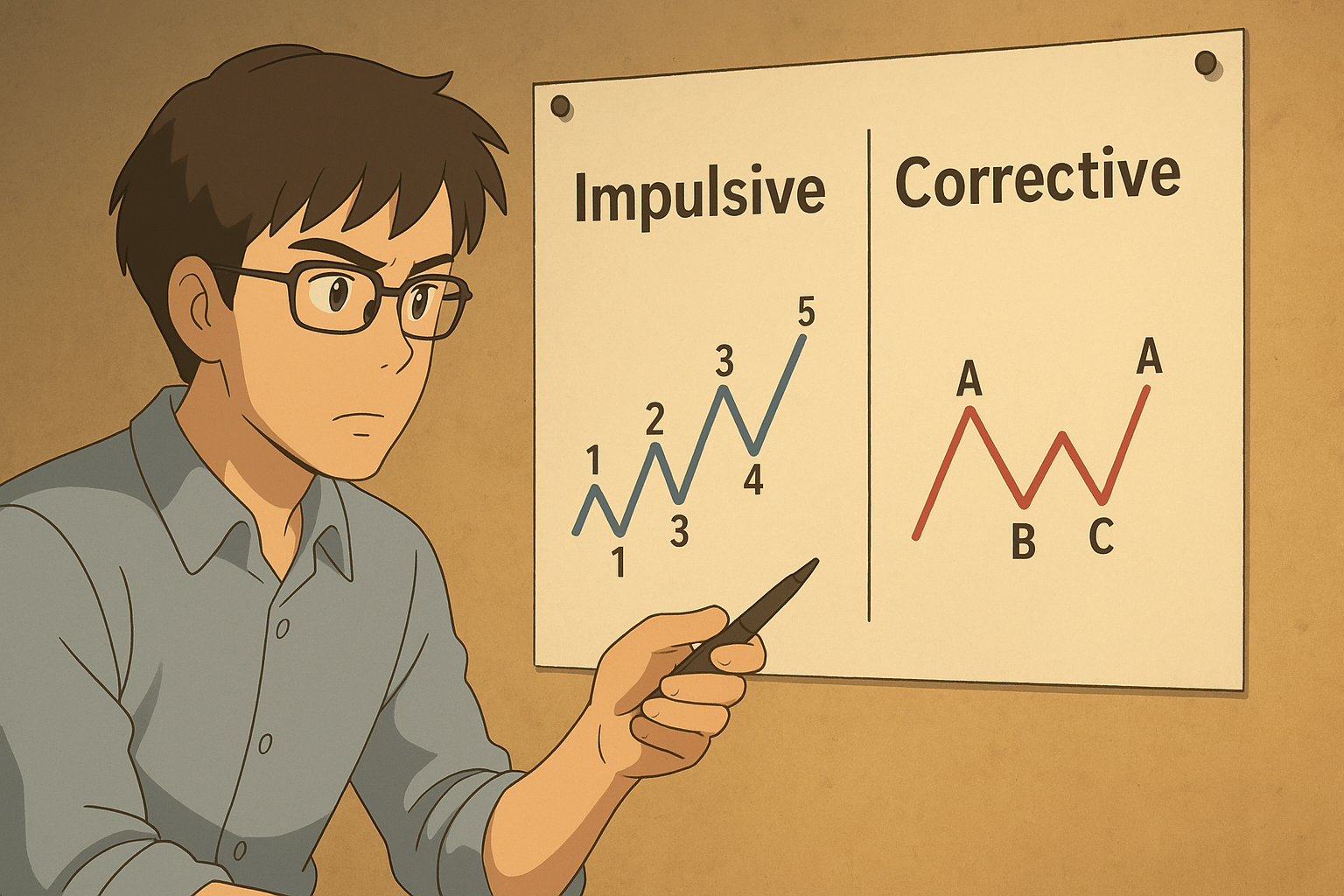
To trade these effectively, you must first be able to distinguish between an Impulsive vs Corrective Wave.
Price looks stable, even bullish for a moment, then suddenly resumes the main trend.
Let’s break this down practically, the way traders actually use it.
What Is Elliott Wave Flat Correction?
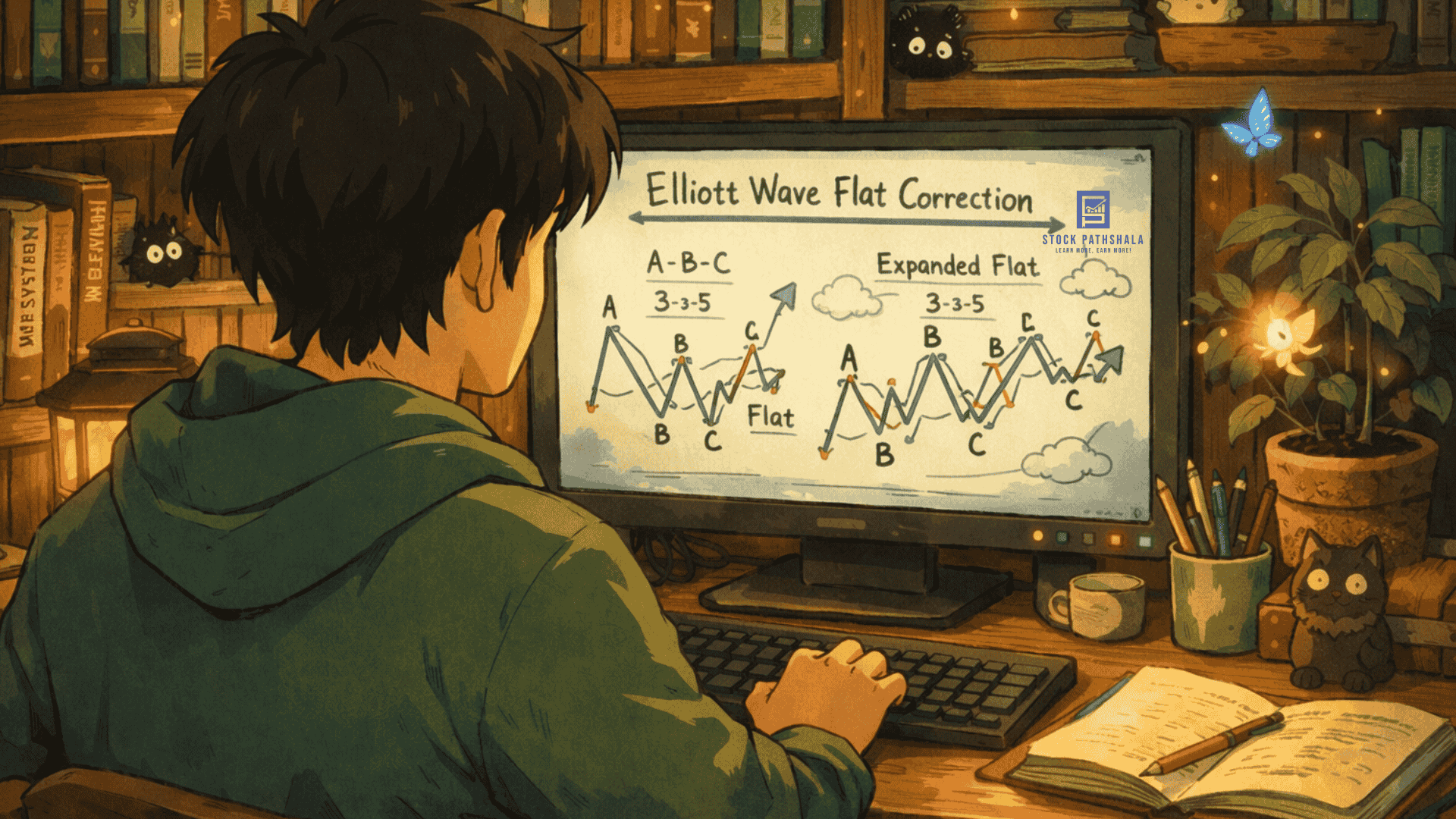
An Elliott wave flat correction is a three-wave corrective pattern labeled A B C and follows the broader Elliott wave ABC correction rules.
Unlike a sharp zigzag, a flat moves mostly sideways. It usually appears as Wave 4 in an impulse or Wave B in a larger correction.
Understanding Elliott Wave Formation is the key here:
- Wave A: Corrective move against the trend
- Wave B: Retraces most or all of Wave A
- Wave C: Moves beyond Wave A’s end or slightly below it
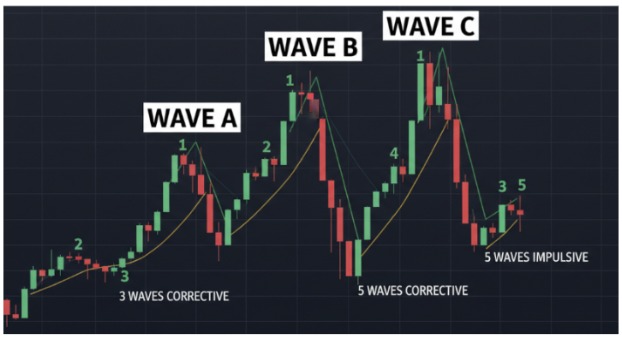
The internal structure follows 3 3 5:
- Wave A is corrective
- Wave B is corrective
- Wave C is impulsive
This sideways personality is what confuses traders. It feels like the trend is resuming, then it feels weak, then it finally breaks out.
Elliott Wave Flat Correction Rules
Before trading it, you must understand the rules. Without rules, it’s just guessing.
To truly identify market correction phases versus actual trend changes, look for these signature traits:
- Wave A subdivides into three waves, not five
- Wave B retraces at least 90 percent of Wave A
- Wave C subdivides into five waves
- Wave C often equals Wave A in length
Wave B retracing deeply is the signature trait. If B barely retraces, it’s probably not a flat.
Here’s a simple comparison:
| Component | Structure | Behavior |
| Wave A | 3 waves | Counter trend |
| Wave B | 3 waves | Deep retracement |
| Wave C | 5 waves | Strong directional move |
If Wave C breaks strongly with momentum and volume, the flat is completing.
Types Of Elliott Wave Flat Correction
Not all flats behave the same. There are three main types of Elliott wave flat corrections.
Knowing the difference saves you from entering too early.
1. Regular Flat Correction
This is the standard version.
- Wave B retraces close to 100 percent of Wave A
- Wave C ends slightly beyond Wave A
It looks balanced and controlled. Common in stable markets like NIFTY during slow consolidation phases.
2. Elliott Wave Expanded Flat Correction
Now things get tricky.
An Elliott wave expanded flat correction happens when:
- Wave B exceeds the start of Wave A
- Wave C extends well beyond Wave A
This creates a false breakout. This often looks like an Elliott Wave reversal pattern to the untrained eye, trapping traders before the main trend resumes.
3. Elliott Wave Running Flat Correction
This one is less common but important.
In an Elliott wave running flat correction:
- Wave B moves beyond the start of Wave A
- Wave C fails to break the end of Wave A
In simple terms, Wave C is weak. The correction cannot push the price to a new extreme.
This usually happens in very strong trends, where underlying momentum remains powerful, and the market quickly resumes the primary direction.
Regular vs Expanded vs Running Elliott Wave Flat Correction
| Feature | Regular Flat | Expanded Flat | Running Flat |
| Wave Structure | 3 3 5 | 3 3 5 | 3 3 5 |
| Wave B Behavior | Retraces near 100 percent of Wave A | Exceeds start of Wave A | Exceeds start of Wave A |
| Wave C Behavior | Fails to break the end of Wave A | Extends strongly beyond Wave A | Fails to break end of Wave A |
| Market Psychology | Balanced correction | False breakout trap | Strong underlying trend |
| Typical Market Condition | Stable, sideways markets | Emotional tops or bottoms | Very strong trending markets |
| Trading Implication | Controlled pullback | High stop hunts, sharp reversal | Shallow correction, trend resumes quickly |
Example scenario
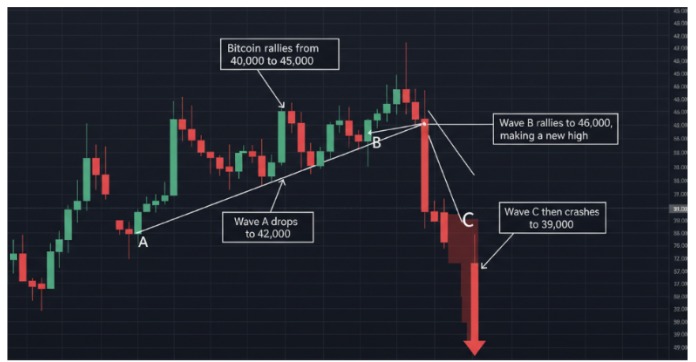
Bitcoin rallies from 40,000 to 45,000.
Wave A drops to 42,000.
Wave B rallies to 46,000, making a new high.
Wave C then crashes to 39,000.
That new high during Wave B traps breakout buyers. Painful, but common.
How To Identify Elliott Wave Flat Structure In Real Charts?
When you spot Wave Patterns live, the first step is to observe the prior trend. Flats usually follow strong impulses.
To build a reliable Elliott Wave forecast, you must measure Wave B using Fibonacci retracement. If Wave B pulls back 90% or more of Wave A, start considering a flat.
Then, wait for Wave C to form five waves. Many traders use RSI divergence during Wave C to confirm exhaustion.
After that, observe volume behavior. During a flat correction, volume usually contracts as price moves sideways. When Wave C completes, and the next impulse begins, volume often expands sharply.
That spike in participation helps confirm the correction has likely ended, and the main trend is resuming.
Practical checklist:
- Strong previous impulse
- Sideways price movement
- Deep Wave B retracement
- Five-wave structure in Wave C
Patience matters. Entering during Wave B often leads to frustration.
How To Trade Elliott Wave Flat Correction?
Now the real question: how to trade Elliott wave flat correction without getting trapped?
When it comes to Elliott Wave vs Price Action, the Elliott structure gives you the “map,” while price action gives you the “trigger.”
Strategy 1: Trade Wave C Completion
This is safer.
- Wait for Wave C to complete five waves
- Look for divergence on RSI or MACD
- Enter in the direction of the main trend
Stop loss should be just beyond Wave C’s extreme.
Example:
In an uptrend, after a flat correction, buy near the end of Wave C. Stop below Wave C low.
Target the previous high or the Fibonacci extension.
Strategy 2: Aggressive Entry After Wave B
Advanced traders sometimes short Wave C in expanded flats.
But risk is higher because timing Wave B completion is tricky.
Risk control rules:
- Risk no more than 1 to 2 percent of capital
- Confirm five wave structure inside Wave C
- Avoid trading during major news events
Flat corrections are deceptive. That’s the point. They shake out weak hands.
Why Traders Misread Flat Corrections?
Flats feel boring. Sideways markets create emotional fatigue. Traders overtrade.
Wave B especially creates confusion. It often looks like the trend has resumed. That’s where discipline matters.
Honestly, most retail traders buy the Wave B breakout. Professionals wait for Wave C exhaustion.
When faced with these complex traps, many skeptics ask, does Elliott Wave theory work, or is it just hindsight?
The truth is, the theory works for those who can separate a “fake” breakout from a structural completion.
This is why many seek Elliott Wave mentorship, as learning to stay patient during these traps is the hardest part of the game.
The difference is patience.
Conclusion
The Elliott wave flat correction is not dramatic. It is subtle. It moves sideways, builds tension, and then resolves sharply.
When you recognize this specific corrective pattern, you stop viewing the market as “stagnant” and start seeing it as a coiled spring preparing for a breakout.
If you learn the structure, follow the rules, and manage risk properly, it becomes predictable. Not perfectly predictable, but structured enough to trade with logic instead of emotion.
Markets breathe. Flats are that deep breath before the next move.
To dive deeper into these patterns and see them applied to live charts, consider joining our stock market classes where we break down complex volatility into tradable setups.
FAQs
Q1: What Is The Main Feature Of Elliott Wave Flat Correction?
Ans: Wave B retraces at least 90 percent of Wave A. That deep retracement defines the pattern.
Q2: How Is Expanded Flat Different From Regular Flat?
Ans: In an expanded flat, Wave B makes a new high or low beyond Wave A’s start, and Wave C extends strongly beyond Wave A.
Q3: Where Do Flat Corrections Usually Appear?
Ans: They commonly appear as Wave 4 in an impulse or Wave B within a larger corrective pattern.
Before investing capital, invest your time in learning Stock Market.
Fill in the basic details below and a callback will be arranged for more information: