

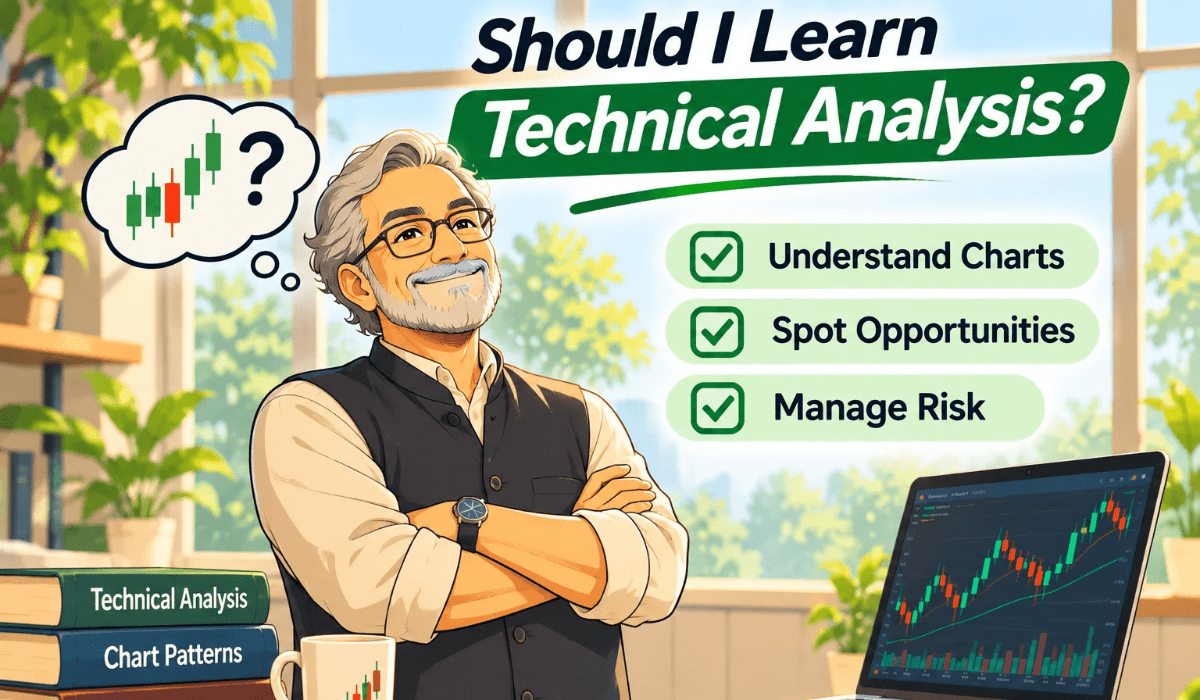
Should I learn technical analysis, or is it just lines on a chart that look clever? It is a fair question, and the honest answer depends on what you want from the market.
This blog helps you decide. No hype and no promises, just a clear look at who gains from charts, who can wait, and where to begin if you do start.
Who Should Learn Technical Analysis?
Technical analysis is the study of price and volume on a chart. If your decisions depend on when to enter and when to exit, it is directly useful to you.
It helps most in these cases.
- Intraday traders, who need clear levels for entry, exit and stop loss within one session.
- Swing traders, who hold for days or weeks and need to read the trend.
- Positional traders, who want to avoid entering during a sharp fall.
- Investors who care about timing, who use charts to pick a calmer entry point.
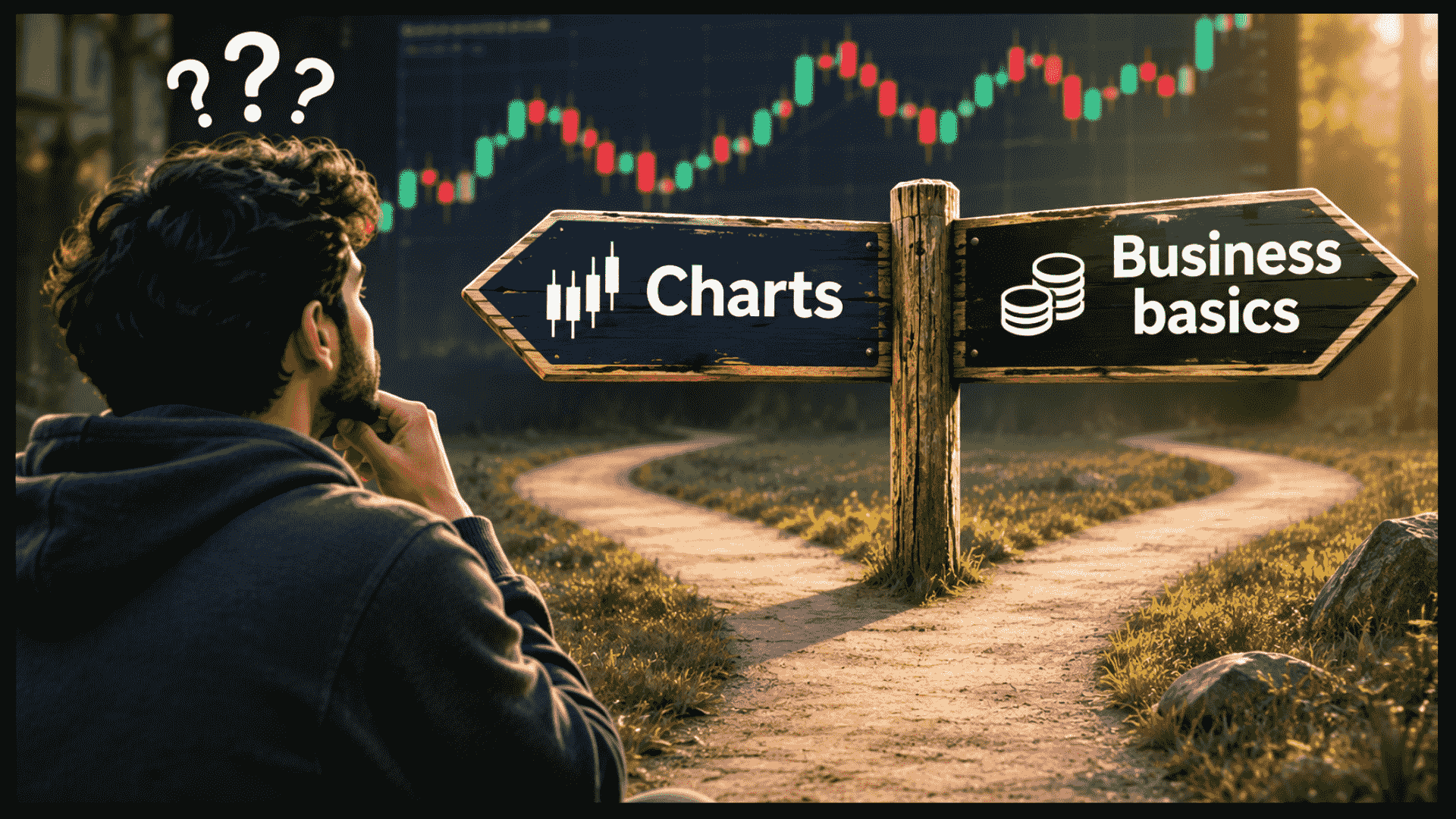
Not sure which of these describes you? Reading about the different types of investors in the stock market can help you place yourself before you choose what to study.
Can Beginners Skip Technical Analysis?
Not everyone has to start with charts. Some goals need other skills before candlesticks and indicators.
A beginner who plans to buy good businesses and hold for many years can spend the first months on business basics. Checking a chart for a rough entry point is a nice add-on later, but it is not the starting point.
The same is true if you only invest a fixed amount every month. In that case, discipline and time matter more than chart reading.
Knowing whether you are an investor, a trader or a speculator makes this choice easier. This explainer on investor vs trader vs speculator makes the difference clear.
Difference Between Technical and Fundamental Analysis
Both methods try to answer different questions. Fundamental analysis asks what a business may be worth, while technical analysis asks what price is doing right now.
Here is a side by side view of how the two compare.
| Point | Technical analysis | Fundamental analysis |
|---|---|---|
| Main question | What is price doing, and where? | What is the business worth? |
| Data used | Price, volume, chart patterns | Earnings, debt, growth, valuation |
| Usual time frame | Minutes to months | Years |
| Best suited for | Traders and timing | Long-term investors |
| Main weakness | Subjective and lagging | Slow, and price can ignore it for long |
Neither method is better in every situation. They simply answer different questions, so the right pick depends on how long you plan to hold.
If you lean towards the business side, learning how to find valuation of a stock is the natural first step there.
Can You Use Technical and Fundamental Analysis Together?
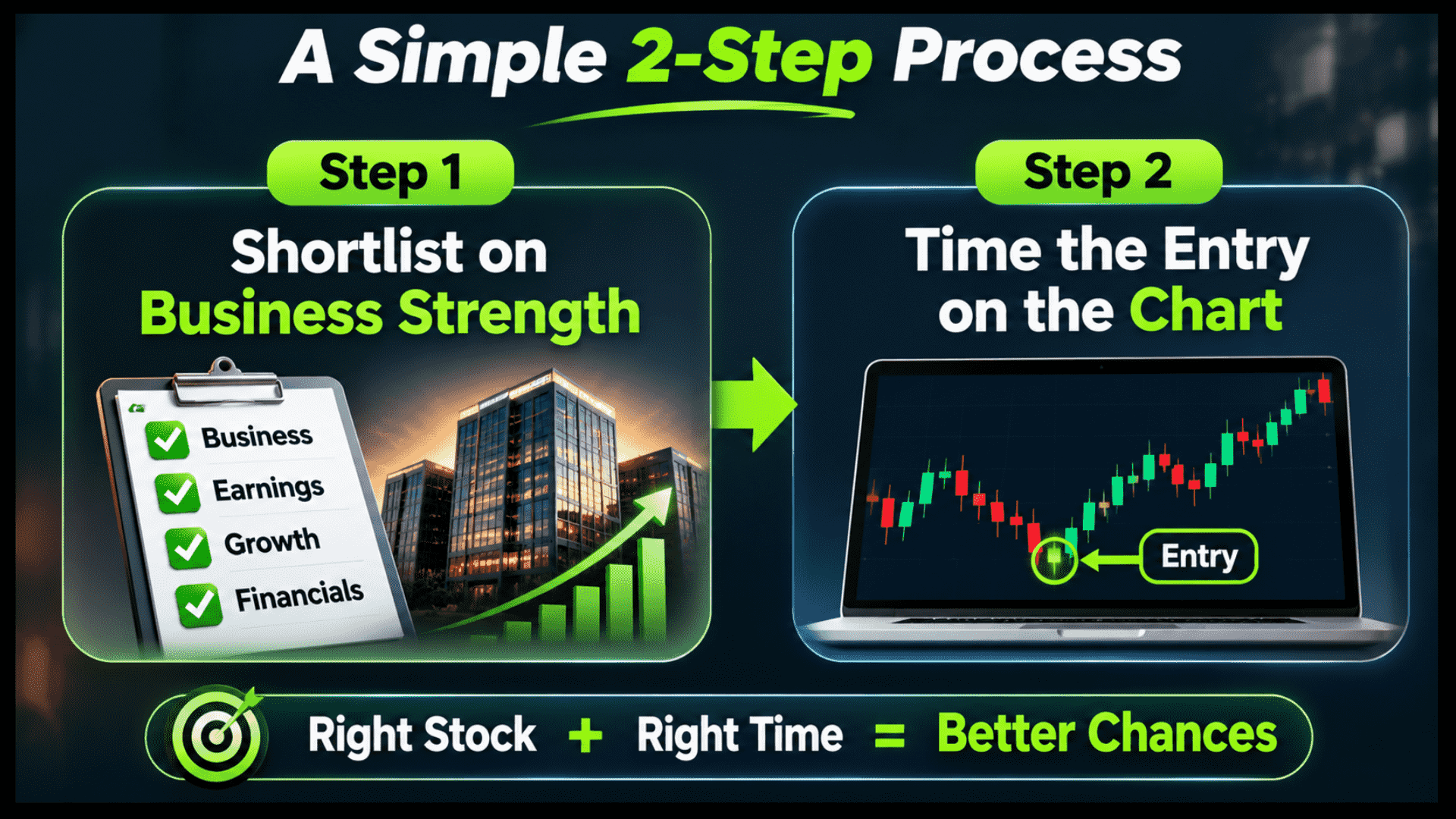
Yes, and many market participants use both. One method helps you choose what to look at, and the other helps you decide when to act.
A common flow is to shortlist businesses on fundamentals, then use the chart to pick an entry point and a stop loss. This does not remove risk, but it gives your decision a clear structure.
Even long-term styles like value investing vs growth investing can use charts to avoid entering in the middle of a sharp fall.
What Are the Limitations of Technical Analysis?
It is important to know the limits before you spend months on it. Charts show probabilities, not certainty.
Keep these limits in mind.
- No certainty. Even a clean setup can fail, so every trade needs a stop loss.
- Subjectivity. Two people can read the same chart in two different ways.
- Lagging signals. Most indicators use past prices, so they confirm a move after it has started.
- Surprise events. News, results or global events can break any pattern.
So technical analysis is a decision tool, not a prediction machine. Anyone promising sure profits from charts is selling hope, not skill. If you ask AI to explain charts, verify its numbers using the ChatGPT Prompts for Technical Analysis.
What Should You Learn First in Technical Analysis?
The order matters. Many beginners jump straight to indicators, skip the basics and then feel lost.
Here is a simple order that works for most learners.
| Step | Topic | What you learn |
|---|---|---|
| 1 | Price and trend | Uptrend, downtrend and sideways moves |
| 2 | Support and resistance | Levels where price has paused or turned before |
| 3 | Candlesticks | How buyers and sellers fought in each period |
| 4 | A couple of indicators | Reading trend and momentum with two simple tools |
| 5 | Risk management | Stop loss, position size and risk per trade |
| 6 | Advanced topics | Elliott wave and similar wave-based methods |
Notice that risk management comes before the advanced topics. A simple method with a stop loss is safer than a complex method without one.
Which Moving Average Pair Should Beginners Start With?
Indicators are easier when you begin with a pair that shows trend clearly. Keep the chart clean while you learn.
When you reach indicators, start small. A moving average pair like the 20 and 50 EMA crossover is a good example of how an indicator reads trend.
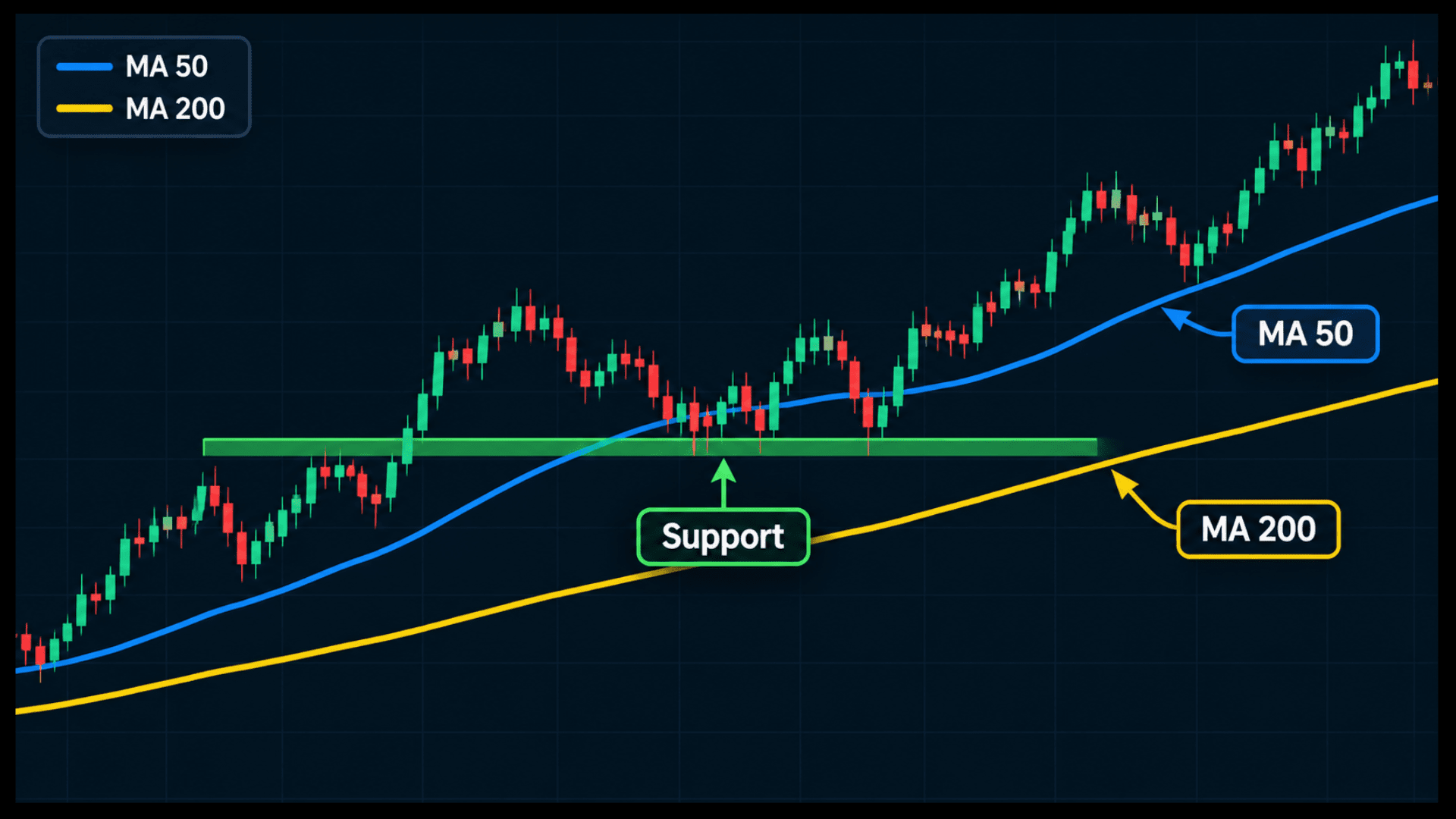
Add one more indicator at most, and only after the first one feels natural. More lines on the chart usually mean more confusion, not more clarity.
Is the 9 EMA Good for Short Time Frames?
Fast averages react quickly to price. That suits short time frames, but it also brings more noise.
If you prefer shorter time frames, the 9 EMA strategy shows how a single fast average is used for timing.
Why Should Risk Management Come Before Advanced Tools?
Because every method fails sometimes. What keeps you in the game is how much you lose when it does.
Learn to decide your stop loss before you enter a trade. That one habit matters more than any pattern name.
When Should You Learn Elliott Wave?
This topic comes late in the learning order. Most learners should build the basics before they try it.
Elliott wave is a wave-based way of reading price, and it needs a solid base of trend and levels first. Once those feel natural, you can read about Elliott wave strategies for trading and decide if it suits your style.
How Long Does It Take to Learn Technical Analysis?
There is no fixed timeline, and anyone giving you an exact one is guessing. Still, a rough idea helps you plan your time.
Most learners can understand trend, levels and candlesticks within a few weeks of regular study. Feeling comfortable on live charts usually takes a few months, and real skill comes from years of practice and review.
If your plan is day trading, it also helps to understand the intraday trading time windows, since price behaves differently across the session.
Should You Learn Technical Analysis?
Your goal decides how much technical analysis you need. Use this table as a quick way to check where you stand.
| Your goal | Learn technical analysis? | Where to start |
|---|---|---|
| Intraday trading | Yes, it is essential | Price, levels, candlesticks, stop loss |
| Swing trading | Yes, it is essential | Trend, support and resistance, two indicators |
| Long-term investing, just starting | Optional at first | Business basics first, charts later |
| Better entry timing as an investor | Helpful | Trend and major levels |
| Replacing your salary quickly | Think twice | Learn risk first, expect no guarantees |
| General curiosity about markets | Yes, the basics | Price and trend |
This table is a starting point, not a rule. Your comfort with risk and the time you can give should shape the final choice.
Want to learn technical analysis step by step, with someone who answers your doubts?
In our live classes of 1 to 1.5 hours, you can join from your mobile, ask doubts live and learn step by step. There is no fixed batch to wait for, and we never promise or guarantee profits.
Conclusion
If you want to trade, whether intraday or swing, then yes, it is worth learning. If you are a new long-term investor, start with business basics and add charts later.
Whatever you choose, remember the limits. Charts help you plan entries and exits, but they never remove risk.
Disclaimer: This blog is for educational purposes only and is not investment advice. Please verify rules and details on the official exchange and SEBI websites.
Frequently Asked Questions
Before investing capital, invest your time in learning Stock Market.
Fill in the basic details below and a callback will be arranged for more information: