



Holding a stock for weeks or months means your portfolio frequently encounters quarterly announcements. This is where fundamental analysis for positional trading becomes essential.
It is not about becoming a full-time financial analyst, it is about knowing what to check before an earnings date so a result does not catch you off guard.
Fundamental analysis for positional trading is not about becoming a full-time analyst.
It is about knowing what to check before an earnings date, so a result does not catch you off guard.
Why Do Fundamentals for Positional Trading Matter More Than in Swing Trading?
A swing trade often closes before results even arrive. A positional trade usually does not have that luxury.
That comes from the weeks-to-months holding period covered in our guide on what positional trading is.
Holding through an announcement means you are exposed to whatever the company reports, good or bad.
A basic fundamental check reduces the odds of a nasty surprise, even though it cannot remove that risk entirely.
What Should Fundamental Analysis for Positional Trading Cover Before You Enter?
This is not full valuation work. It is a short, practical screen you run before committing to a multi-week hold.
Our guide on how to select stocks for positional trading already covers the entry-level version of this.
That means growing sales, reasonable debt, and no heavy promoter pledging.
Applying structured positional trading risk management early ensures these initial checks protect your capital before a multi-week hold begins.
This post goes one layer deeper, into what actually happens once you are holding through the results date itself.
How to Manage Positional Trades Ahead of Earnings Reports
Know the date well in advance. Mark it the moment you enter the trade, not the week before it happens.
Then decide your plan ahead of time. Will you hold the full position through results, trim it beforehand, or exit entirely?
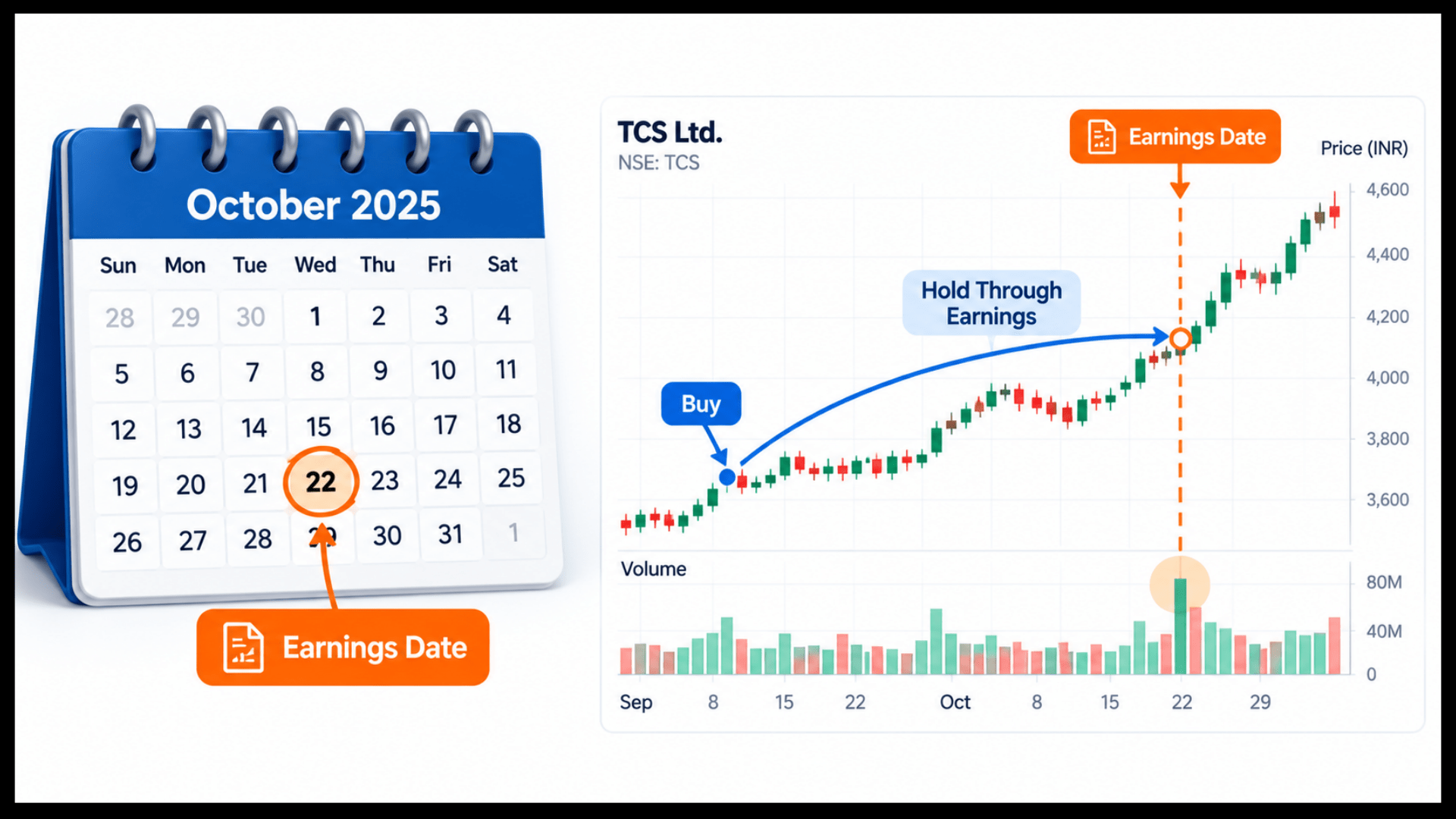
Decide this before the emotional pressure of an actual announcement hits.
What Fundamental Metrics Matter Most in Positional Trading?
Skip the headline profit number as your only check. It hides more than it reveals.
Look at revenue growth compared to the same quarter last year, not just the previous quarter.
Applying disciplined positional trading rules helps investors maintain objectivity when comparing annual growth cycles rather than getting distracted by short-term fluctuations.
Seasonal businesses can look great or terrible purely from quarter-to-quarter comparisons.
Check operating margin. A company growing revenue while margins shrink is a different story than one growing both together.
Read the management commentary or the earnings call summary. This is often where real information hides.
Look for guidance for the next few quarters, new risks mentioned, or an unexpected change in strategy.
Some traders use positional trading with AI tools to summarise these calls faster, but reading the guidance yourself still matters.
Red Flags Every Earnings Season Positional Trading Plan Should Watch
A few signals are worth extra attention whenever they show up in a result.
Keep these four on your checklist:
- A sudden jump in debt without a clear reason given
- Falling margins for more than one quarter running
- Guidance for the next quarter that is weaker than the current trend
- A change in auditor, or a delay in results announcement itself
None of these automatically means exit the trade. They mean look closer before you decide.
Can a Single Result Break a Trend? Fundamentals Meet Technicals
A strong result on a stock already trending up often extends the trend further.
This is exactly the situation your existing technical rules, like the ones in our positional trading strategy guide, are built to handle.
Let price and volume confirm the reaction, rather than reacting purely to the headline number.
A weak result inside an uptrend is different. It can break the trend even if the technical setup looked fine the day before.
This is where a defined stop loss earns its keep, since it protects you regardless of why the trend broke.
A signal like positional trading with MACD often reflects this shift too.
It sometimes turns down within a week or two of a disappointing result.
A Worked Example of Earnings Season Positional Trading
These figures are illustrative and are not a recommendation.
You are holding a consumer goods stock through its quarterly results, bought two months earlier on a clean weekly uptrend.
Revenue growth comes in at 9 percent year on year, in line with recent quarters.
Margins hold steady, and guidance for the next quarter is unchanged.
Nothing here changes your original thesis. You continue holding, trailing your stop as before.
Now imagine the same result showed margins falling for the second straight quarter, with cautious guidance.
That is a genuine change in the picture, worth reviewing your position size or exit plan.
This holds even if the stock has not yet broken its technical trend.
Fundamental Analysis for Positional Trading: Do You Need Annual Reports?
Not for positional trading specifically. Save deep annual report reading for long-term investment decisions, where the horizon justifies the time.
For positional trades, a focused quarterly check is usually enough: revenue, margin, guidance, and any major red flag.
You are managing a multi-month trade, not researching a decade-long hold.
If you are holding through results using futures or options rather than equity delivery, the tax treatment differs too.
Our guide on positional trading tax in India explains that distinction in full.
Ready to learn fundamental analysis for positional trading the way working traders actually use it?
Reading a result is one skill. Knowing what to actually do with it, inside a disciplined trading plan, is another.
Our positional trading classes online teach both together, live, on real Indian stocks.
Conclusion
Fundamental analysis for positional trading does not ask you to become a research analyst. It asks for a short, repeatable check before and after every earnings date.
Mark the date early, decide your plan in advance, and read beyond the headline profit.
Year-on-year revenue growth, margin trend, and management guidance tell you far more. When a warning sign shows up, look closer before acting.
Pair this with the technical rules you already trust and a defined stop loss.
That way, results season becomes one more data point in your plan, not a surprise that derails a good trade.
Frequently Asked Questions
Before investing capital, invest your time in learning Stock Market.
Fill in the basic details below and a callback will be arranged for more information: