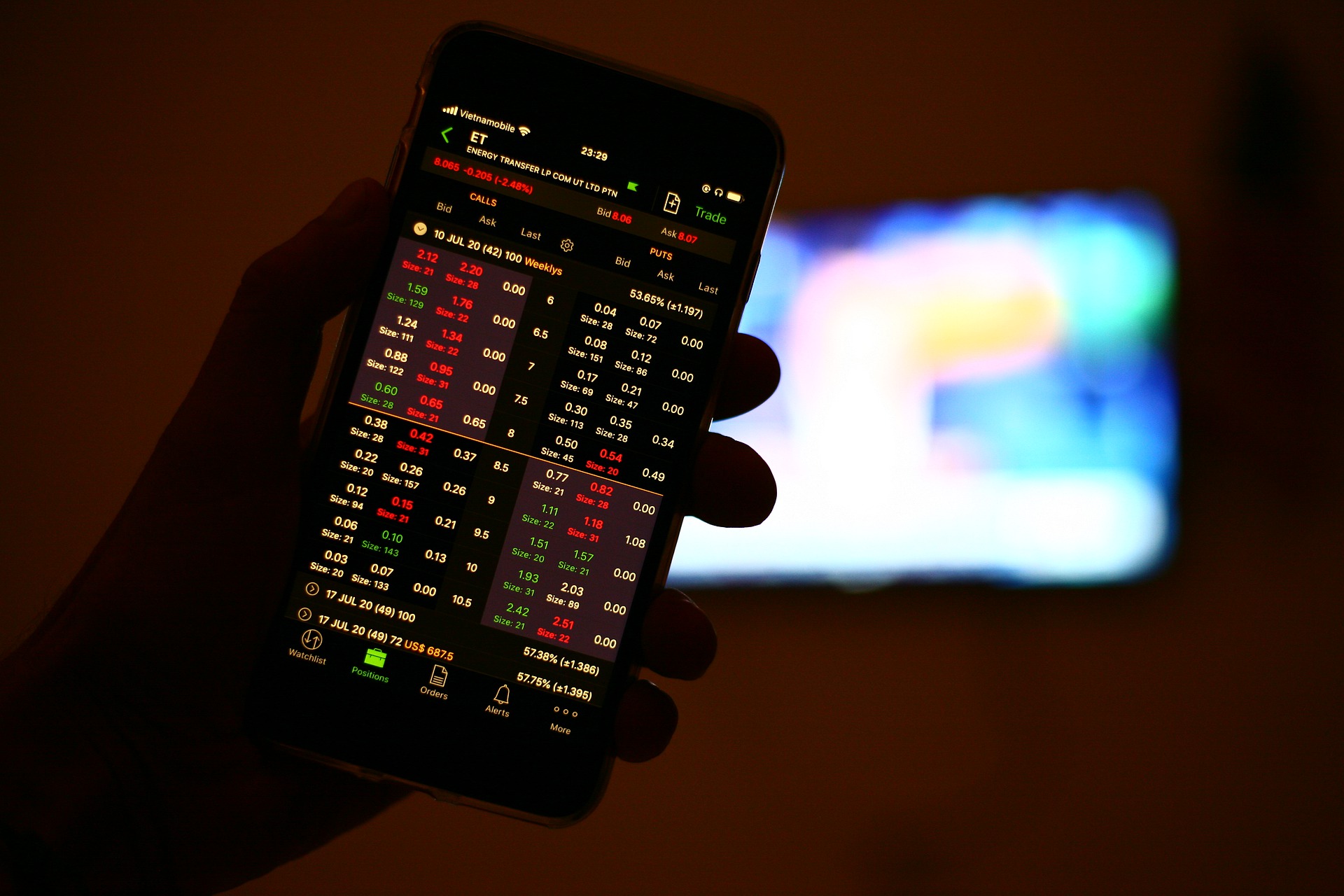



Most trading strategies pick a direction and wait. Gamma scalping does something different.
It profits from the stock simply moving, regardless of which way.
Gamma scalping explained at its simplest is this. You hold a long gamma position, and you trade the underlying stock to lock in small profits as delta drifts away from neutral.
It’s an advanced technique, but the core idea is easier to grasp than it sounds.
Gamma Scalping Requirements: Essential Setup and Positions
You need a long gamma position, usually a long option or a combination of options, started as delta neutral.
Buying a straddle or buying a single at-the-money option, hedged with the underlying stock, are both common starting points.
Long gamma means your delta changes in your favour as the stock moves.
As price rises, your position gains positive delta. Delta is the measure of how much an option’s price moves for a given move in the stock, and our guide on delta meaning in options trading explains it in detail.
As price falls, it gains negative delta. That shifting delta is what you’re going to trade against.
How Position Rebalancing Captures Profits From Delta Drift?
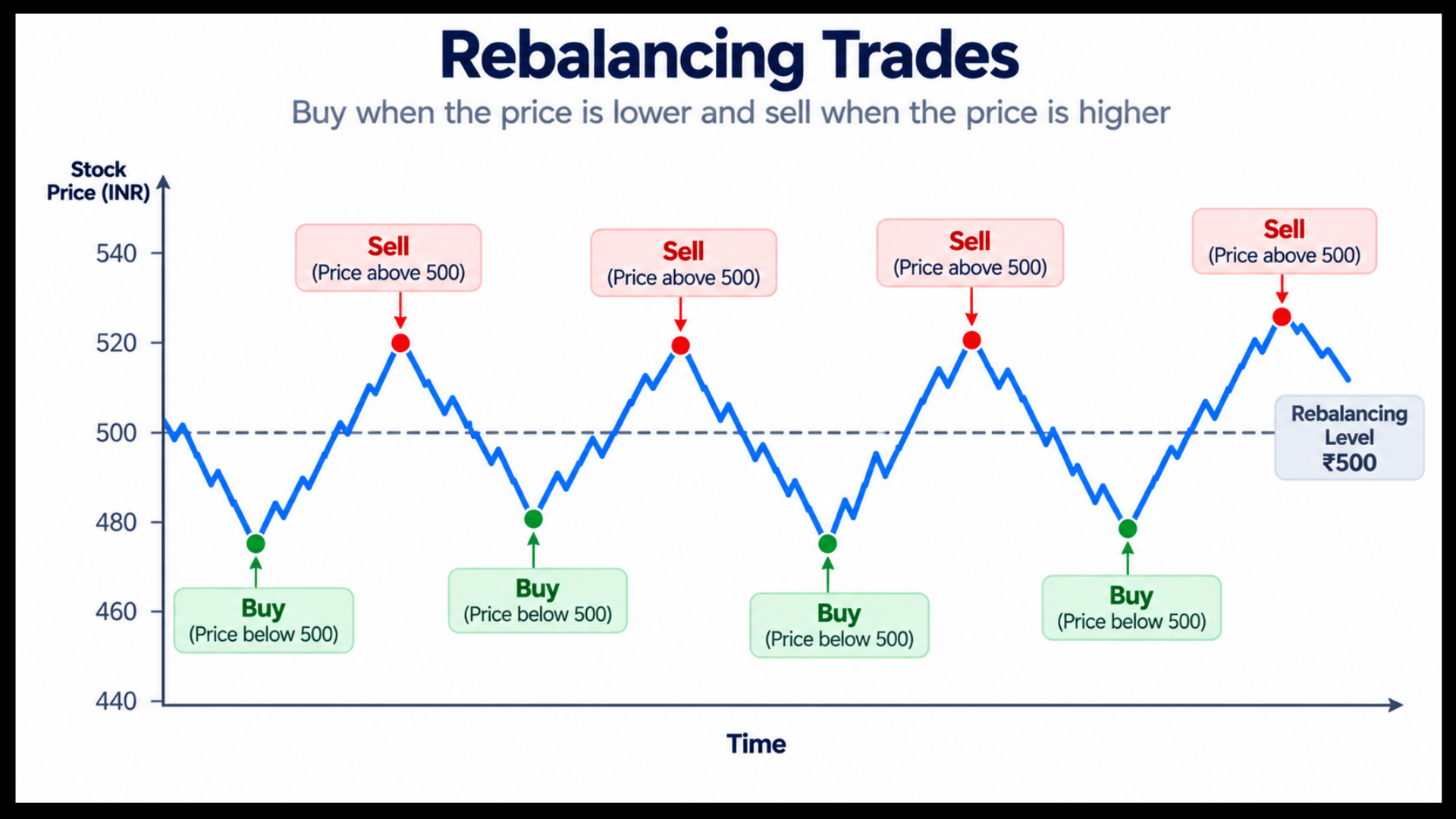
Start delta neutral. As the stock rises, your option position gains positive delta because of gamma.
You sell stock at the higher price to bring your position back toward neutral.
If the stock then falls back, your position gains negative delta.
You buy stock back at the lower price, which locks in the gain from selling high and buying low.
Each rebalancing trade is small. The strategy relies on doing this repeatedly as the stock oscillates.
That repeated profit is the payoff from gamma, the rate at which delta changes as the stock moves, and our guide to option gamma meaning covers it in full.
Gamma Scalping Example With Real Numbers
Suppose you buy an at-the-money call with a delta of 0.50 and hedge by selling 50 shares, starting delta neutral.
The stock rises by ₹20. Gamma has pushed your option’s delta up to roughly 0.65.
You sell another 15 shares to rebalance back toward neutral, selling into strength.
The stock then falls back by ₹15. Your delta drops to roughly 0.52.
You buy back some of the shares you sold, buying into weakness, close to where you started.
Across this round trip, you’ve captured small profits from the stock oscillating, on top of whatever the option itself does.
How Gamma Scalping Generates Profits: Volatility vs. Time Decay
Gamma scalping profits from realised volatility, meaning how much the stock actually moves, compared to the volatility you paid for when you opened the position.
What you paid for is set by implied volatility at entry.
Options get more expensive when implied volatility is high, and our guide to vega meaning in options trading explains how that sensitivity works.
If the stock moves more than implied volatility suggested, the scalping profits can outweigh the time decay cost of holding the long option.
If the stock moves less than expected, time decay can eat into the position faster than the rebalancing gains can offset it.
The Hidden Challenges of Gamma Scalping
Gamma scalping requires watching the position closely and rebalancing often, sometimes multiple times a day.
Transaction costs matter too, since frequent stock trades add up.
It also requires understanding how delta, gamma, and time decay work together, not just one Greek in isolation.
If you need a refresher on how each one works, our guide to options greeks explained for beginners covers the basics.
This is why gamma scalping suits experienced traders who are already comfortable managing a delta-neutral position, not beginners looking for a starting strategy.
Who Should Trade Gamma Scalping? Beginners vs Professionals
Understanding the concept is valuable even if you never trade it yourself.
It builds real intuition for how gamma actually behaves, which helps with simpler strategies too.
Actually running a gamma scalping strategy, though, is better approached after you’re comfortable with the basics.
That includes how option sellers manage the opposite side of this same risk, covered in our post on how to use gamma for option selling.
How Market Conditions Change Gamma Scalping Outcomes?
Suppose you hold the same long gamma position on two different days.
These figures are illustrative:
1. What Happens on a Quiet Day
On a quiet day, the stock barely moves. Your rebalancing trades are small and infrequent.
Time decay eats into the position’s value faster than the tiny rebalancing gains offset it. You end the day slightly behind.
2. What Happens on a Volatile Day
On a volatile day, the stock swings several times. Each swing gives you a rebalancing opportunity, selling into strength and buying into weakness repeatedly.
The accumulated small gains from these trades outweigh that day’s time decay cost. You end the day ahead.
The strategy’s success depends entirely on which kind of day actually shows up, which is why it’s built around realised volatility, not a directional guess.
Which Tools Help Traders Track Delta in Real Time?
Most trading platforms display live Greeks, including delta, directly on the option chain or position screen.
Gamma scalpers watch this delta figure closely throughout the session, since it tells them how much stock to buy or sell to get back to neutral. To understand how to read and act on it, see our guide on how to use delta for option buying.
Some traders set delta alerts for when their position’s delta drifts past a set threshold, prompting a rebalancing trade rather than checking the screen constantly.
Even with alerts, the strategy still demands active attention through the trading day.
Build the Foundation for Strategies Like This
Gamma scalping sits at the advanced end of options trading, built on a solid understanding of the Greeks first.
Our option trading classes take you from the fundamentals through to strategies like this, live, on real Indian stocks.
Conclusion
Gamma scalping flips the usual script in trading.
Instead of betting on direction, you’re betting that the stock moves more than the market expected, and profiting from the motion itself.
The edge comes from realised volatility beating implied volatility, with small rebalancing gains working against daily time decay.
It’s demanding to execute well, needing close monitoring, frequent trades, and tight control over costs.
Still, understanding how it works deepens your grasp of delta and gamma and makes simpler strategies easier to manage, even if you never run it yourself.
Frequently Asked Questions
Before investing capital, invest your time in learning Stock Market.
Fill in the basic details below and a callback will be arranged for more information: