


Ask an experienced option trader what actually drives their decisions, and the answer is rarely “a hunch.” It’s the Greeks . Getting options greeks explained for beginners means breaking down four letters that intimidate a lot of new traders.
See what each one actually measures, and none of them are complicated on their own.
This guide covers all four main Greeks in plain words. Each one links to a deeper post once the basics click.
Why Do Options Greeks Matter Before You Place a Trade?
An option’s price doesn’t move for just one reason. It reacts to the stock price.
It reacts to time passing. It reacts to how much movement the market expects.
The Greeks are simply the names for each of these sensitivities.
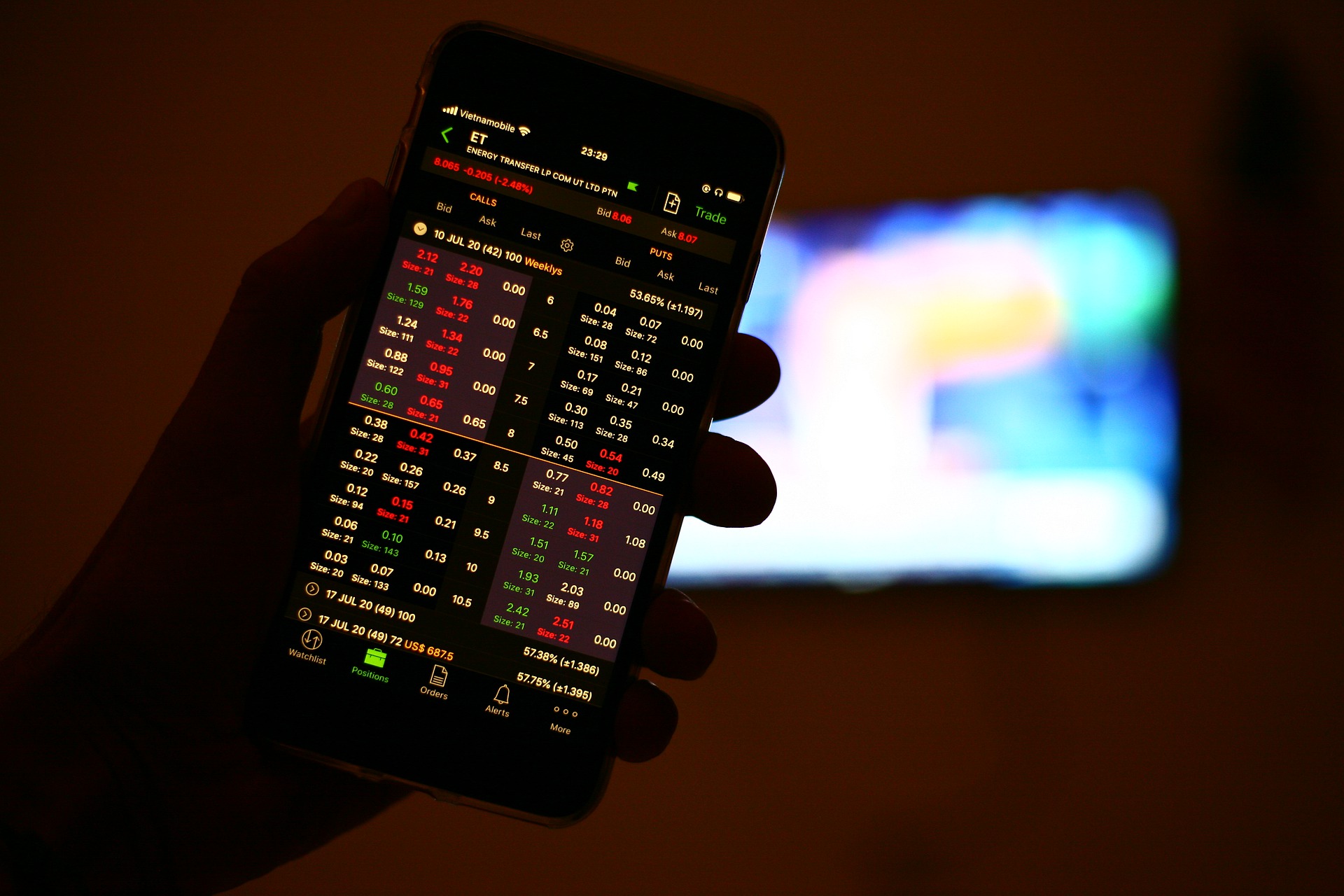
Learn to read them, and an option chain stops looking like a wall of numbers. It starts looking like a set of answers.
What Are the Four Options Greeks Every Beginner Should Know?
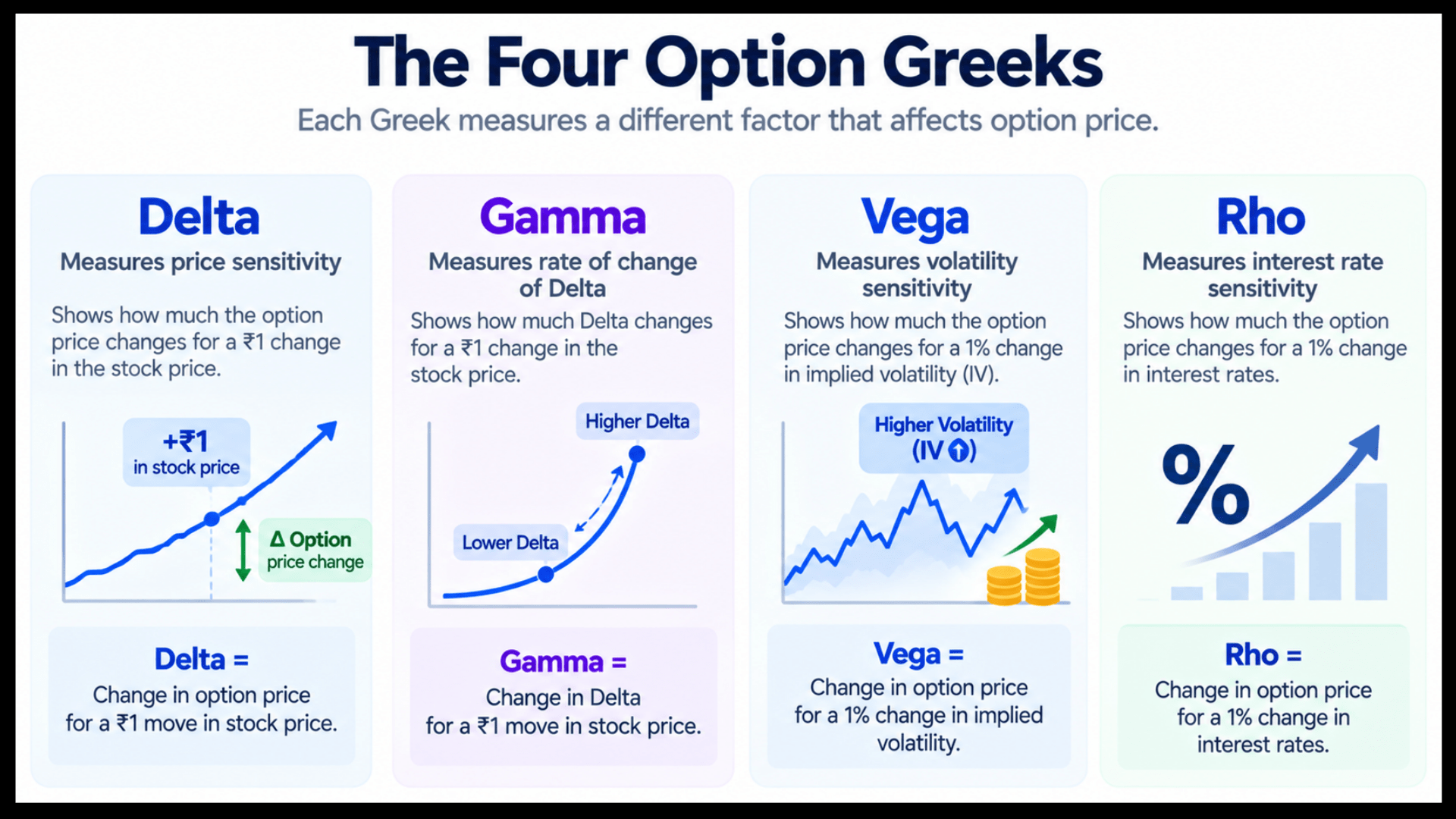
The four main Greeks are delta, gamma, vega and rho. Each one measures a different force acting on an option’s price.
The sections below take them one at a time, starting with the one traders check first.
1. Understanding Delta and Its Priority for Traders
Delta measures how much an option’s price moves for every one rupee move in the underlying stock.
A delta of 0.50 means the option moves roughly ₹0.50 for every ₹1 move in the stock.
It’s also a rough gauge of how likely the option is to expire in the money.
Our full post on delta meaning in options trading covers this with real examples, including how delta shifts as a stock moves.
2. Gamma Acceleration and Expiry Risk
Gamma measures how fast delta itself changes.
It’s the reason option prices can move so sharply in the final days before expiry. Traders often call this period gamma week.
Buyers generally benefit from gamma. Sellers carry the risk side of it, especially as expiry approaches.
Our post on option gamma meaning walks through why this matters so much near expiry.
3. Vega, Volatility, and Premium Movement
Vega measures how much an option’s price changes when implied volatility changes.
This happens independently of the stock price moving at all.
This is why option premiums often rise ahead of events like quarterly results.
They fall sharply afterward even if the stock barely moves, a pattern called volatility crush.
Our post on vega meaning in options trading explains this with a worked example.
4. Rho and Its Relevance for Retail Beginners
Rho measures how much an option’s price changes with a shift in interest rates.
Of the four Greeks, it matters the least for most retail traders.
Interest rates move slowly. Options are usually held for weeks rather than years.
Rho rarely drives a real trading decision for a short-term position.
It’s still worth knowing it exists. You don’t want to be caught off guard seeing it listed alongside the others on a trading platform.
How Do the Options Greeks Work Together in a Real Trade?
They rarely act alone. A single option position carries some combination of all four.
Understanding how they interact is what separates reading a chart from actually managing risk.
Suppose you buy a call option ahead of a company’s quarterly results.
Delta tells you how much it moves if the stock reacts as expected. Gamma tells you how fast that sensitivity builds as expiry nears.
Vega tells you how much of the premium is actually just priced-in anticipation of the event.
That anticipation can evaporate the moment results are announced.
A trader who only watches the stock price and ignores vega, can get the direction right and still lose money once implied volatility collapses.
Worked Example: Right on Direction, Yet the Premium Falls
A stock trades at ₹2,000, two weeks before results.
You buy a call with delta 0.50, gamma 0.04, and vega 2.5. These figures are illustrative.
The stock climbs steadily to ₹2,050 over the two weeks, with implied volatility rising as results approach.
Delta has grown to roughly 0.68 thanks to gamma. The rising implied volatility added further value through vega.
Results are announced. The stock holds at ₹2,050, barely moving further.
Implied volatility collapses. The vega-driven gains partially reverse, even though your directional call was correct the whole time.
This is why checking all three Greeks together, not just delta, gives a more honest picture of what actually happened to your position.
How Do You Use the Greeks for Option Buying and Selling?
Reading the definitions is the easy part. Using them changes how you actually trade.
If you’re buying options, delta should guide your strike selection more than the premium price alone.
Our post on how to use delta for option buying covers that framework.
If you’re selling options, gamma risk should guide your position sizing as expiry approaches.
Our post on how to use gamma for option selling covers that side of the decision.
Moving Beyond Option Basics: Advanced Strategy Integration
Once delta, gamma and vega feel familiar, some traders go further.
They study strategies built specifically around managing these Greeks together.
The more advanced technique, gamma scalping explained in a separate post, actively trades the shifting delta itself.
Neither is a beginner starting point. Both deepen your intuition for how the Greeks move in practice, not just in theory.
Ready to See the Greeks Applied on Live Option Chains?
Watching delta, gamma and vega actually move on a real chain, during a live session, is what makes them click.
Our best option trading classes India cover this from the ground up, live, on real Indian stocks.
Conclusion
The Greeks are not academic trivia. They’re a practical toolkit for understanding why an option’s price moves the way it does.
Delta shows direction, gamma shows how fast that changes, and vega shows what volatility is doing to your premium.
Start with delta. Build up to gamma and vega. Treat rho as background knowledge.
That order will take you further than trying to memorise all four at once.
Read them together before every trade, and an option chain starts giving you answers instead of numbers.
Frequently Asked Questions
Before investing capital, invest your time in learning Stock Market.
Fill in the basic details below and a callback will be arranged for more information: