


Swing trading vs positional trading gets confused more than almost any other pairing, yet understanding the distinction is vital.
Both hold positions longer than a single day while avoiding the years-long horizon of investing, making this choice a question of degree rather than a completely different approach.
Swing trading vs positional trading is really a question of degree rather than a completely different approach, but that degree matters more than it might first appear.
Days or Months: Where Does a Swing Trade Stop Being a Swing Trade?
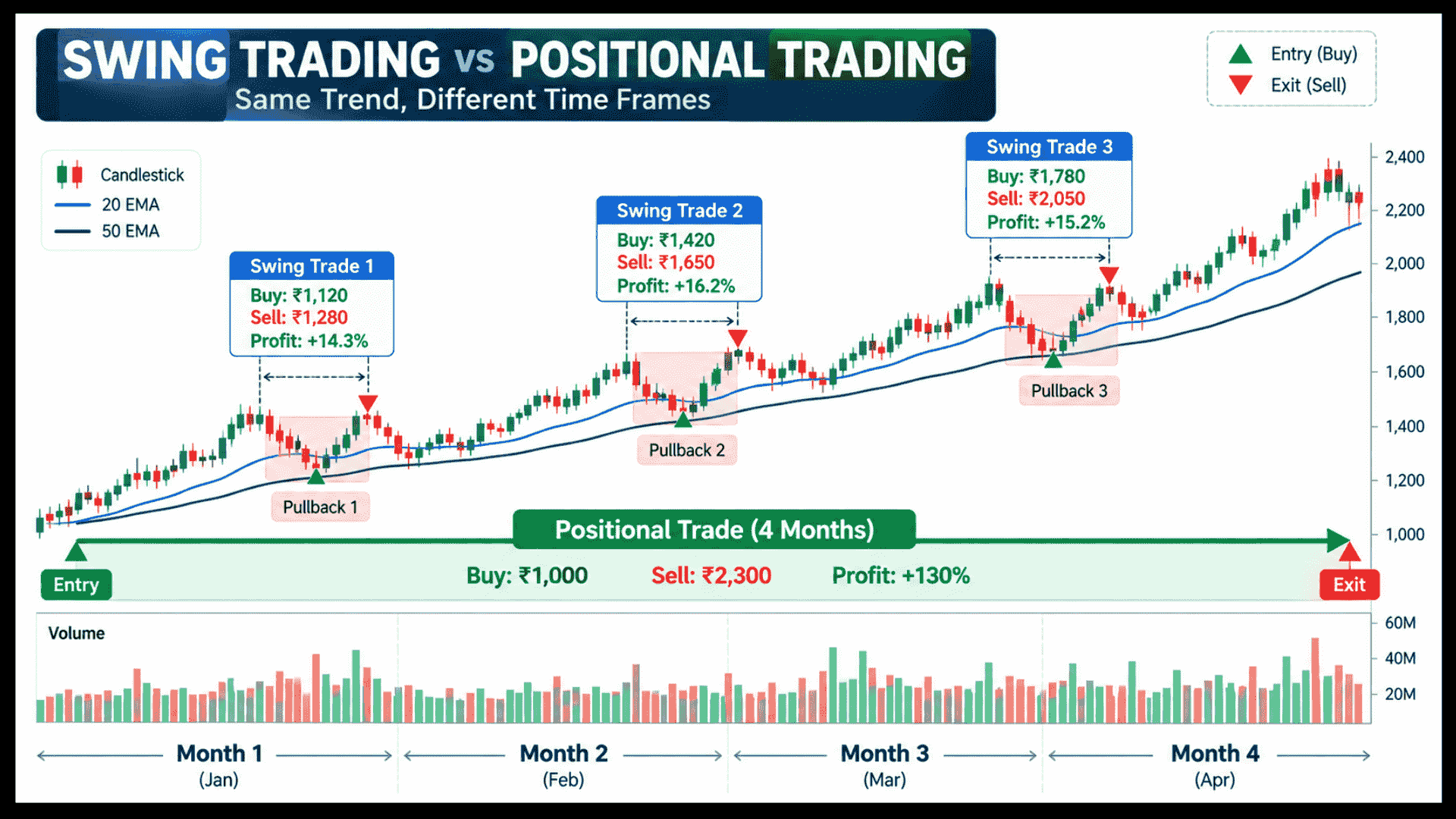
If you have ever wondered what is swing trading, it comes down to holding a position for a few days to a few weeks, aiming to capture one meaningful price swing within a larger trend.
Positional trading holds a position for several weeks to a few months, aiming to capture a much larger portion of that same trend rather than just one swing within it.
Think of it this way: if a stock’s uptrend runs for four months with three distinct pullbacks along the way, a swing trader might take three separate trades, one per pullback, entering and exiting each time.
A positional trader might take one single trade at the start of that uptrend and hold through all three pullbacks, exiting only once the broader trend itself shows real signs of ending.
This longer holding period places positional trading between active trading and long-term investing. To see how the shorter end compares with buy-and-hold, read our guide on swing trading vs long-term investing.
Capital Requirements in Swing vs. Positional Trading: Why Holding Longer Costs More?
Swing and positional trading can look similar on a chart, but they use your capital very differently.
Both styles have broadly similar capital requirements per position, since neither typically relies on the high leverage used in intraday trading. Positional trading, however, often ties up capital for longer stretches per trade.
That means a positional trader generally needs either more total capital or fewer simultaneous positions to stay properly diversified, compared to a swing trader cycling through trades more frequently.
This capital allocation challenge often leads individuals to compare swing trading vs mutual fund investment when deciding how much money to lock away for growth.
If you’d rather keep the original “Capital, Risk and Screen Time” heading, I can write short risk and screen-time paragraphs to complete the section.
Which Style Really Carries More Risk?
Swing trading, by holding for a shorter window, is exposed to fewer individual overnight and weekend gaps per trade.
But it takes more trades overall, so that risk simply shows up more often in smaller doses.
Positional trading holds through more overnight and weekend periods per trade, and therefore carries more cumulative gap risk within any single position, but takes fewer trades overall.
Neither is straightforwardly less risky than the other.
The risk is distributed differently, not eliminated in one style versus the other.
Charts Alone, or Charts Plus Fundamentals?
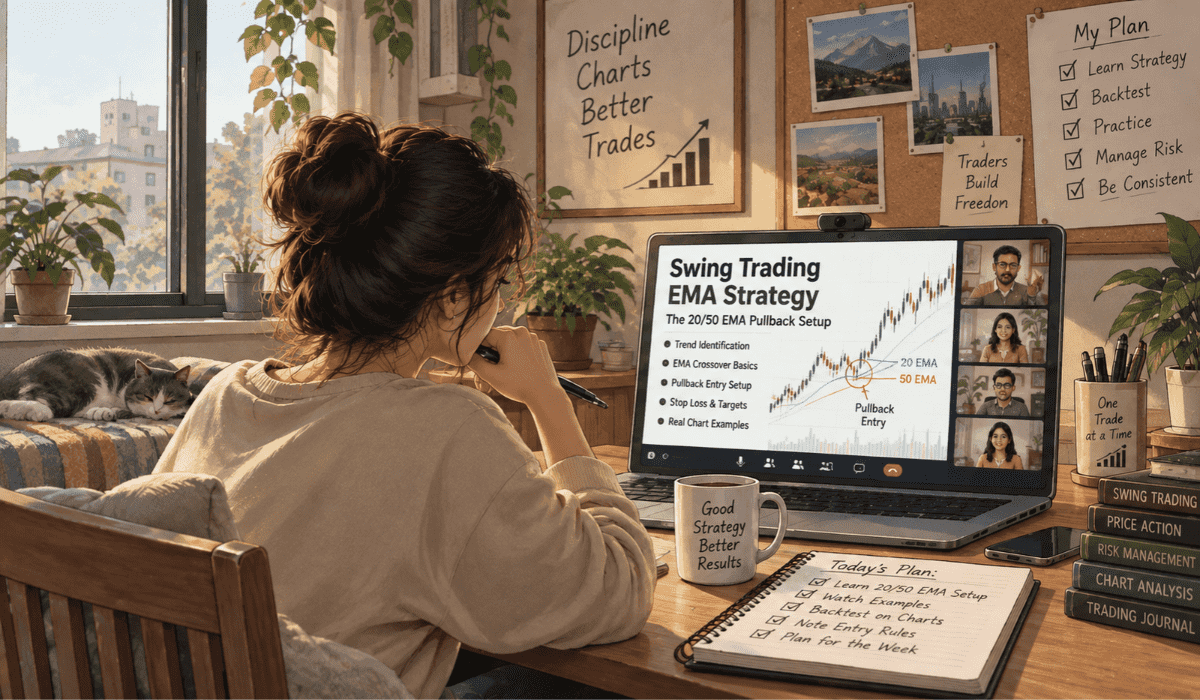
Swing trading leans on short-term technical setups such as EMA pullbacks, RSI dips, and candlestick patterns, since the goal is to time entries and exits around individual price swings.
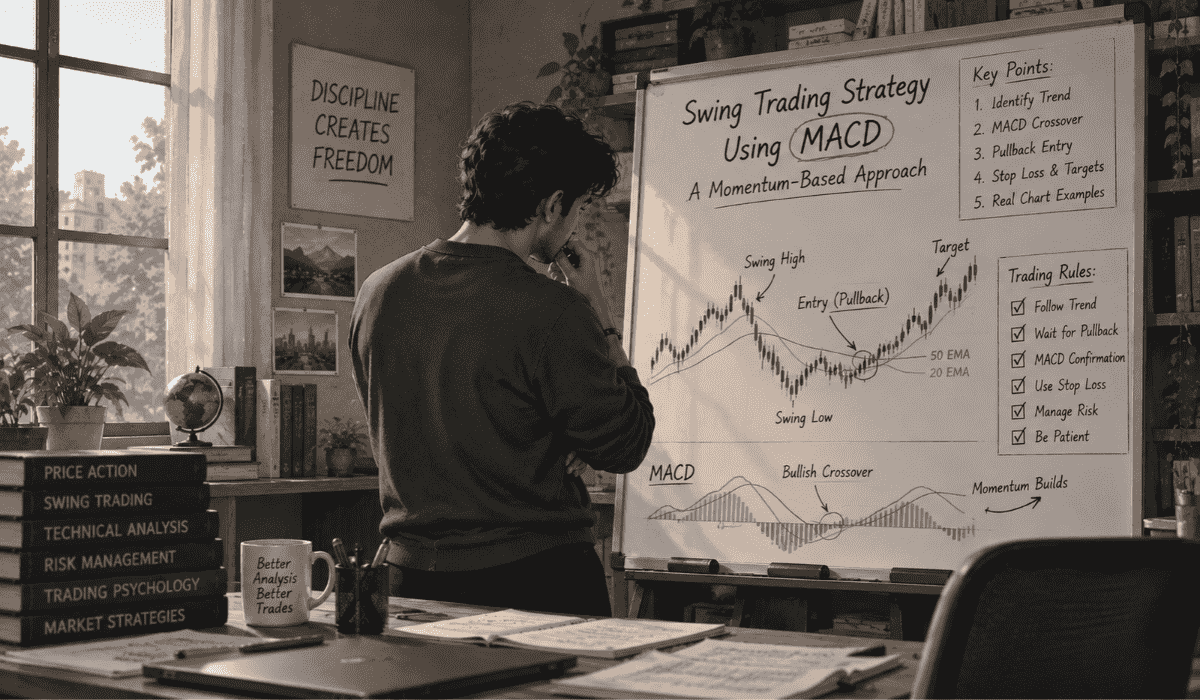
Positional trading blends technical tools, like MACD-based entry signals, with a longer look at the fundamental drivers behind the trend.
Holding for months gives a company’s business developments time to actually shape the trade’s outcome, which rarely happens in a two-week swing trade.
Screen Time Comparison: How Much Attention Do Swing vs. Positional Trades Need?
Both styles require far less daily attention than day trading, a contrast explored in detail in our swing trading vs day trading guide.
Swing trading still involves checking charts and managing positions more frequently than positional trading does, simply because trades resolve faster and new setups appear more often.
A positional trader might genuinely check in a few times a week rather than every single evening.
Fast Feedback or Fewer Decisions: Which Temperament Are You?
If you enjoy finding new setups regularly, and prefer shorter, more frequent feedback on whether your analysis was right, swing trading’s faster cycle tends to suit that temperament better.
If you prefer fewer, more considered trades, and are comfortable holding a position through some volatility without adjusting it constantly, positional trading’s longer horizon often feels less stressful over time.
Some traders genuinely run both simultaneously, using swing trading for shorter-term opportunities and positional trading for stocks with a stronger longer-term trend.
They treat them as complementary rather than competing approaches.
One Stock, Two Traders: Who Captures More of the Move?
Suppose Maruti Suzuki begins a fresh uptrend from ₹10,800, eventually running to ₹12,400 over four months.
Along the way come three distinct pullbacks, at ₹11,100, ₹11,650, and ₹11,950.
A swing trader might take three separate trades here: buying each pullback and exiting near the subsequent high, netting three smaller gains across the move.
Each requires its own entry, stop loss, and exit decision, and each carries its own transaction costs.
A positional trader might buy once near ₹10,850, close to the very start of the trend, and hold through all three pullbacks without acting on any of them individually.
They exit only once the broader uptrend shows genuine signs of ending, potentially capturing more of the total ₹1,600 move in a single trade, with a single set of transaction costs.
But this requires the patience to sit through three separate pullbacks without reacting to any of them.
Neither approach is objectively better here. The swing trader captured three smaller, faster wins with more decisions and more transaction costs along the way.
The positional trader captured a larger single move with fewer decisions but needed real patience to hold through pullbacks that, in the moment, might have looked concerning.
Where Does the Line Between the Two Actually Blur?
In practice, the line between swing trading and positional trading is not always sharp.
A swing trade meant to last ten days can extend into a five-week hold if the trend proves stronger than expected and the trader simply keeps trailing the stop loss rather than forcing an early exit.
Many experienced traders treat holding period targets as a rough guide rather than a rigid rule.
They let genuinely strong trends run longer than originally planned rather than exiting purely because a predetermined number of days has passed.
Want Structured Guidance on the Medium-Term Approach That Fits You?
Whether swing trading’s faster pace or positional trading’s longer horizon suits you better often becomes clearer with real practice rather than just reading about the difference.
Our Online Swing Trading Classes teach the full swing trading approach live, so you can see firsthand whether this pace fits how you actually want to trade.
Conclusion
Swing trading vs positional trading ultimately comes down to how long you want to stay in a trade and how you handle what happens in between.
Swing traders take more frequent, shorter trades and get faster feedback, while positional traders ride larger portions of a trend with fewer decisions and more patience.
Neither style removes risk; each simply distributes it differently. The right choice depends on your temperament, available capital and time.
Many traders even combine both. Real practice, not theory, is what usually makes the better fit clear.
Frequently asked questions
Before investing capital, invest your time in learning Stock Market.
Fill in the basic details below and a callback will be arranged for more information: